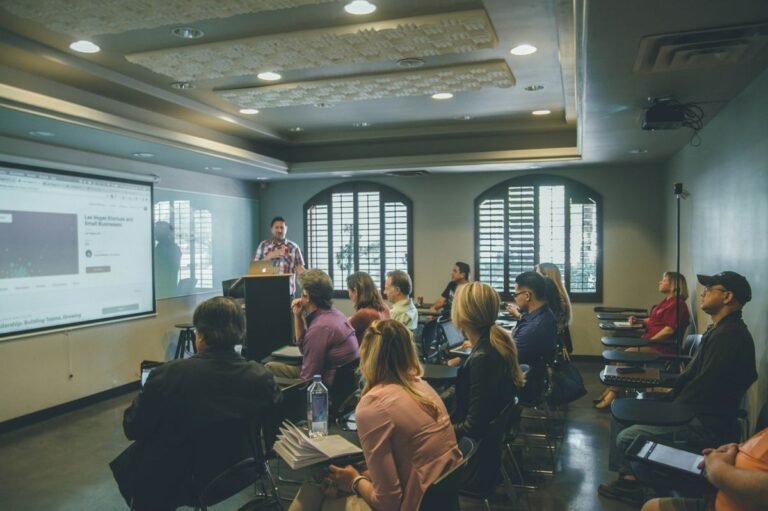
scaffolding techniques ESL classroom teacher and students

Scaffolding Techniques ESL: 7 Best Methods

Scaffolding in ESL means giving students temporary support — sentence frames, graphic organizers, teacher modeling, peer help — that lets them attempt tasks just beyond what they can do alone. The support is designed to be removed once learners gain confidence. Research on Vygotsky’s Zone of Proximal Development shows that scaffolded instruction produces measurably stronger…


Minimalism as a Lifestyle | Elementary ESL Reading Worksheet PDF

Minimalism as a Lifestyle | Elementary ESL Reading Worksheet PDF

📄 Download Printable PDF Worksheet Free, classroom-ready, one click — includes answer key on page 3. Reading Worksheet — Elementary (C) | tahricteaches.com Do you have too many toys, clothes, or things in your room? Many people today are learning about minimalism. This is a way of living with fewer things. People who live this…

Formative Assessment: 7 ESL Techniques

Formative Assessment: 7 ESL Techniques

Formative assessment in ESL means checking student understanding during a lesson — not after it — so you can adjust your teaching while there’s still time to help. Seven techniques that work in real classrooms: exit tickets, observation checklists, traffic light self-assessment, mini whiteboards, one-minute papers, peer assessment with structured criteria, and concept mapping. Most…

extensive reading ESL students reading in classroom

Extensive Reading for ESL: 7 Ways That Work

Extensive reading (ER) is a method where students read large quantities of text at or slightly below their level — mainly for meaning and enjoyment, not detailed study. For ESL teachers, it builds vocabulary and fluency more reliably than grammar drills because it generates the volume of comprehensible input that language acquisition actually requires. The…

Socratic seminar ESL students in circle discussion

Socratic Seminar for ESL: 7 Steps to Deep Discussion

A Socratic Seminar is a student-led discussion method where learners sit in a circle, discuss a shared text or question, and build on each other’s ideas through open-ended inquiry. In ESL classrooms, it develops critical thinking, academic discussion skills, and sustained speaking fluency at B1 level and above — without the competitive structure of a…