Sunlight streaming through a misty forest canopy above an underground mycorrhizal fungal network
|

The Wood Wide Web: How Fungi Connect the Forest

Beneath every forest floor, invisible to the naked eye, there is a network of extraordinary complexity. It connects trees to each other, carries nutrients across hundreds of meters, and allows a dying tree to send a final gift to its neighbors. Scientists call it the mycorrhizal network. Most of us call it the Wood Wide…

Sunlight filtering through a green forest canopy, the setting for questions about whether plants feel pain
|

Do Plants Feel Pain? The Science Explained

No. Plants have no brain, no nervous system, and no nociceptors, so they cannot feel pain the way an animal does. But they detect damage in seconds, send electrical and chemical signals through their whole body, and change their behavior afterward — responses that look remarkably like reacting to an injury, even without anyone home…

Two friends laughing together on a bench, illustrating the idiom break the ice
|

English Idioms: Friendship — 10 Expressions You Need to Know

Few relationships generate as much figurative language in English as friendship. We talk about friends who stick with us through thick and thin, the awkward moment two strangers finally break the ice, and the sting of discovering someone was only a fair-weather friend. These expressions carry centuries of human experience about how people connect, support…

Station rotation model in an ESL classroom with three groups of students
|

Station Rotation: 7 ESL Techniques That Work

Station rotation ESL teaching splits a class into small groups that cycle through three or more activity stations — typically a teacher-led station, a digital or independent practice station, and a collaborative task station — on a fixed timer. Each group gets focused, level-appropriate work instead of sitting through one whole-class lesson pitched at the…

Teacher leading an international ESL classroom using CLIL content and language integrated learning techniques
|

CLIL: 7 ESL Techniques That Work

CLIL (Content and Language Integrated Learning) means teaching a non-language subject — science, geography, history — through English, so students pick up content and language in the same lesson instead of two separate ones. It only works if the teacher scaffolds the language load; the seven techniques below (vocabulary tiering, silent-video prediction, hot-seating, pyramid discussion,…

Reciprocal teaching ESL classroom small group reading strategy
|

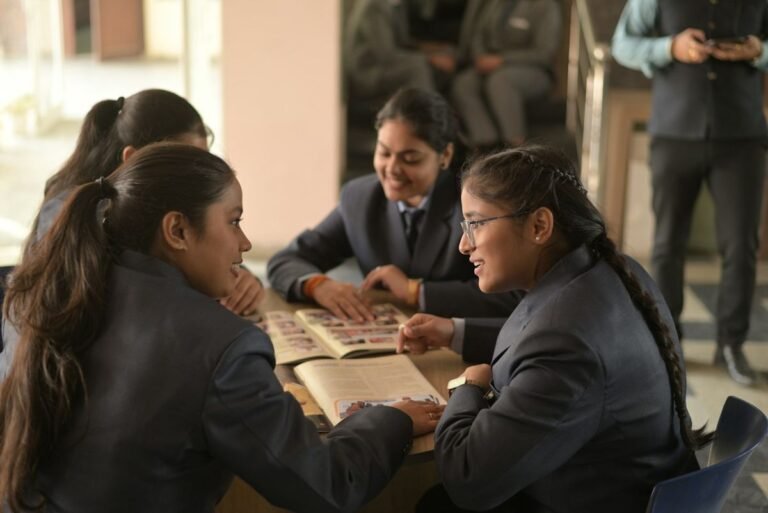
Reciprocal Teaching: 7 ESL Techniques That Work

Reciprocal teaching hands four reading roles — predicting, questioning, clarifying, and summarizing — to students themselves, who rotate through them in small groups while the teacher steps back and listens. Annemarie Palincsar and Ann Brown developed the method in 1984 and moved struggling readers from the 20th to the 50th percentile in comprehension after just…