
Buxiban Teaching: 7 Survival Tips
Taiwan had 17,710 licensed cram schools as of mid-2025, a five-year high, and roughly 70% of the country’s high school students and 60% of middle schoolers pass through one every week. That’s the industry a new buxiban teacher walks into: not a handful of language centers, but a NT$150 billion tutoring economy built almost entirely on after-school hours. Most foreign teachers get hired into it within their first month in Taiwan, handed a textbook, and left to figure out the room on their own. The seven things below are what actually gets you through that first semester intact.

What Buxiban Teaching Actually Looks Like
A buxiban is a private, for-profit school that students attend after their regular school day ends, usually from around 4 PM to 9 PM on weekdays. Unlike a public school classroom, buxiban teaching puts one foreign teacher in front of 10 to 20 students with no co-teacher in the room and no second adult to call on when a lesson goes sideways. The school supplies a syllabus and a set of workbooks, but how you actually run the fifty minutes is left almost entirely to you.
That gap between “here’s the material” and “here’s how to teach it” is where most new hires struggle. Public school ESL programs in Taiwan usually pair a foreign teacher with a local co-teacher who handles discipline and translation. Buxibans skip that pairing on purpose — it’s part of why they can run smaller, more frequent classes at a lower cost per student. You’re the only adult the kids answer to, which means every classroom management decision is yours, starting on day one.
Tip 1: You Run the Room Alone, So Plan Like It
Walk into your first buxiban class assuming backup isn’t coming. No co-teacher means no one to step in if two eight-year-olds start arguing over a marker, and no one to translate when a student genuinely doesn’t understand an instruction. Build every lesson with that constraint baked in: clear hand signals for “stop,” “quiet,” and “line up,” modeled and practiced before you need them under pressure.
Veteran teachers on Forumosa’s Taiwan teaching forum repeat the same advice: respect the students first, because a room that respects you back is the only real management system that holds up without a second adult in it. Gestures, props, and a consistent set of routines do more work than any disciplinary chart taped to the wall.
Pick five commands you’ll use in every single class — line up, pencils down, eyes on me, quiet voices, find a partner — and teach the matching gesture for each one in the first ten minutes of your very first lesson. A six-year-old who doesn’t yet have the English to understand “please settle down” absolutely understands a raised hand held flat and still. That one habit, repeated identically every class, replaces half the verbal discipline a co-teacher would normally handle for you.

Tip 2: Match Your Energy to the Last Period of Their Day
Your students have already sat through six or seven hours of regular school before they walk into your 7 PM class. A slow warm-up or a quiet grammar drill at that hour reads as an invitation to zone out, not a lesson. The buxiban classes that hold attention run on short, high-energy blocks — five to eight minutes per activity, with a physical or competitive element in at least half of them.
This is where high-energy classroom games earn their keep. Team points, timed challenges, and movement-based drills aren’t filler — they’re the mechanism that keeps a tired nine-year-old’s attention on English instead of on the clock. Swap in a new activity format every ten minutes and the fatigue stops being your problem to manage.
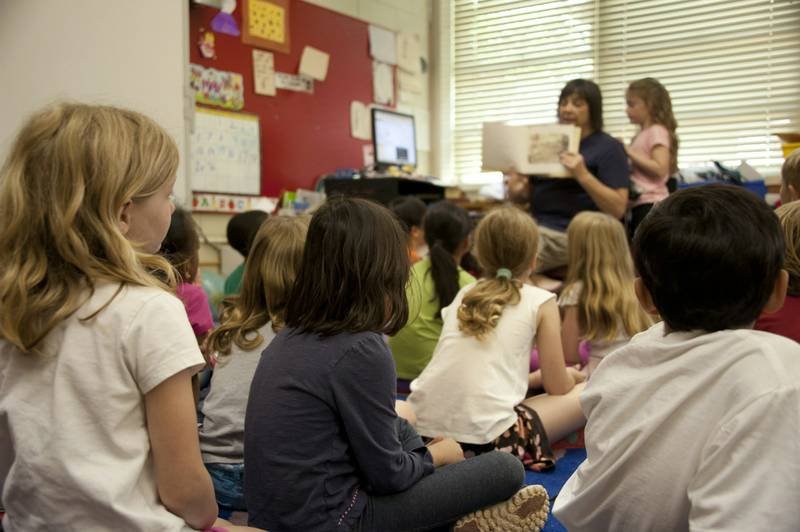
Tip 3: Build Your Consequences Before Day One
Decide your discipline system before you ever face a room full of kids, not in the middle of your first disruption. Pick two or three consequences you’re actually willing to follow through on — losing a turn in a game, a seat change, a note home — and use them the same way every single time. Kids test a new teacher in the first two weeks specifically to find out whether the rules are real.
Consistency matters more than severity here. A mild consequence applied every time beats a harsh one applied occasionally, because what buxiban students are actually probing for is whether you’ll flinch. Decide the line in advance, and holding it becomes a formality instead of a confrontation.
Tip 4: Treat Parent Pressure as Part of the Job
Parents are paying out of pocket for a buxiban seat, often on top of public school tuition, and they expect to see results they can point to — a higher test score, a bigger vocabulary list, visible homework. That pressure gets passed straight to you, sometimes through the school’s Taiwanese staff, sometimes directly at pickup. New teachers who read this as personal criticism burn out fast; the ones who last treat it as a predictable feature of a results-driven industry.
The practical fix is documentation, not debate. Keep a simple record of what you covered each week and how each student performed on it, so when a parent asks why their child isn’t further along, you have a specific answer instead of a defensive one. It turns an emotional conversation into a factual one almost every time.

Tip 5: Use the Curriculum, Don’t Worship It
Every buxiban hands new hires a workbook and a pacing guide, and most of those materials were written for an average student who doesn’t exist in your actual room. You’ll have a six-year-old who’s never seen the Roman alphabet sitting next to one who’s been in English classes since age three, both assigned the same page. Teaching straight from the book to that spread guarantees you lose one half of the room or the other.
Use the curriculum as your spine, not your script. Pull the core vocabulary and grammar target from the assigned unit, then build the actual activities around the kids in front of you — this is exactly the gap that differentiated instruction for mixed-level classrooms is designed to close. Schools rarely object to this as long as test scores on the official material hold up, and they almost always do.

Tip 6: Learn the Status Games Kids Play at Cram School
Buxiban students see the same twelve to fifteen classmates several nights a week, often for years, which turns the classroom into a small social world with its own pecking order. A student who answers every question isn’t always confident — sometimes they’re performing for the room, and shutting that down bluntly creates a quieter but more resentful class. Read the social dynamic before you try to flatten it.
Team-based activities work better than individual cold-calling in this environment precisely because they redirect the social competition toward the lesson instead of away from it. Put the dominant student and the quiet one on the same team, and the status game starts working for your lesson plan instead of against your classroom management.
It also pays to notice who sits where without being told. A student who always picks the seat furthest from you isn’t necessarily weaker academically — in a room they’ve shared with the same classmates for two years, that seat might be the one place they feel safe not performing. Rotate seating every few weeks instead of letting a fixed social order calcify, and the quieter kids get pulled into the lesson instead of permanently opting out of it.
Tip 7: Protect Your Hours Before Year One Burns You Out
Buxiban schedules run heaviest exactly when most jobs end — 3 PM to 9 PM on weekdays, often with Saturday morning classes added on. New teachers who say yes to every extra class the school offers in month one are usually the ones asking to cut their hours by month six. Decide your ceiling on teaching hours per week before the school decides it for you.
Le evidence-based strategies for preventing teacher burnout apply directly here: block out non-negotiable recovery time the same way you’d block out a class period, and treat lesson-prep shortcuts — reusing a strong activity instead of building a new one from scratch every time — as a sustainability tool, not a sign you’re coasting.



None of this makes buxiban teaching easier on paper. It’s still a job where you’re the only adult in the room, the hours sit on top of everyone else’s free time, and the curriculum was written for a student who isn’t quite the one sitting in front of you. But teachers who plan for those three things from week one — not after they’ve already been burned by them — are the ones still teaching in Taiwan five years later instead of flying home after one contract.
Sources
- Taipei Times — “Cram school boom continues, despite birthrate drop” — 17,710 licensed cram schools as of mid-2025, a five-year high.
- Taiwan Business TOPICS — “Taiwan’s ESL Market Reaches Saturation” — scale and structure of Taiwan’s private tutoring industry.
- Forumosa — Teaching English in Taiwan forum, classroom management thread — practitioner discussion on buxiban discipline and management.







 FR
FR  EN
EN  ZH
ZH  ZH_CN
ZH_CN  KO
KO  VI
VI  AR
AR  ES
ES  HI
HI  PT
PT  BN
BN  RU
RU  JA
JA  TR
TR  DE
DE  IT
IT  PL
PL  ID
ID  TH
TH  FA
FA  UK
UK  TL
TL  HE
HE  UR
UR  SW
SW  RO
RO  NL
NL  MS
MS  TA
TA  PS
PS  HU
HU  EL
EL  SV
SV  NB
NB  NN
NN  DA
DA  CS
CS  SR
SR  AM
AM