
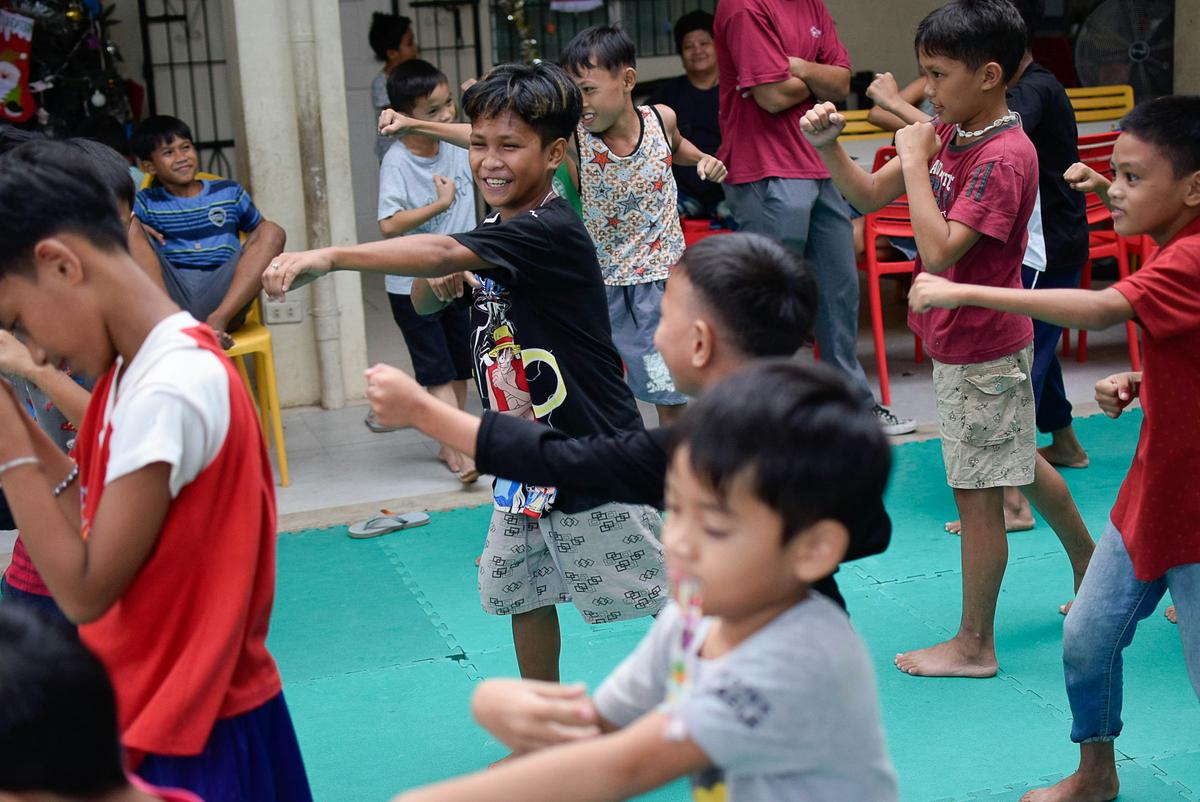
Total Physical Response: 8 TPR Activities for ESL
A six-year-old who has heard “stand up” thirty times still won’t produce it on command. Ask her to physically stand up every time she hears it, though, and by the fifth repetition her body starts moving before her brain finishes translating. That gap between hearing and doing is exactly what Total Physical Response is built to close. James Asher, the psychology professor who developed TPR at San José State University, based the method on how children absorb their first language — through movement and comprehension long before they ever produce a word. Decades later, it’s still one of the few techniques that works in a silent classroom and a chaotic one.

What Is Total Physical Response, Exactly?
Total physical response asks students to demonstrate understanding through action rather than speech. The teacher gives a command — “touch the door,” “pick up the red pen,” “jump twice” — and students respond with their bodies. No translation, no repeat-after-me chanting, no pressure to produce language before they’re ready. Asher’s original research found that learners who went through a silent, movement-based period before speaking retained vocabulary longer and spoke with better structure once they did start talking, a finding later cited across dozens of applied linguistics studies on comprehensible input.
The method leans hard on the idea that comprehension has to come before production. Most classrooms do the opposite — they ask a student to say “I am opening the window” before that student has ever physically connected the phrase to the action. TPR flips the order. You give the command, the student opens the window, and the phrase gets wired to a real memory instead of a rote pattern. The British Council’s TeachingEnglish resource still uses Asher’s original command-and-respond structure as the baseline model almost sixty years later, which says something about how little needs fixing.
Is TPR Effective for All Ages?
No, and any article that tells you otherwise is selling you a method, not describing one. TPR earns its reputation with young learners and true beginners because the physical-comprehension link maps cleanly onto concrete vocabulary — verbs, objects, spatial prepositions, classroom instructions. Put a room of teenagers or professional adults through the same “stand up, sit down, touch your nose” routine and you’ll lose them inside four minutes; the content reads as childish even when the underlying mechanism is sound.

Where TPR keeps working with older students is in adapted form — command chains for giving directions, gesture-based vocabulary drops for abstract terms, or the storytelling variant known as TPRS. TEFL.net’s rundown of TPR variations makes the same distinction: the technique scales down in intensity as the class ages up, not the other way around. If you teach adults, treat everything below as a source of adaptable mechanics rather than a lesson plan you can run unmodified.
8 TPR Activities That Actually Work
These aren’t theoretical. Each one below has a clear command structure, a built-in way to check comprehension, and a natural point where you can raise the difficulty once students stop looking lost.
1. Command Compliance (Simon Says, Minus the Elimination)
Give a stream of single commands — stand, sit, jump, turn around, touch your ear — and drop the “Simon says” trap altogether for the first few rounds. The elimination mechanic that makes the party game fun for native speakers just adds anxiety for language learners who are still decoding the instruction. Once vocabulary is solid, add the trap back in as a harder mode. Keep commands to one action per sentence until you see instant, confident responses.
2. Action Songs and Chants
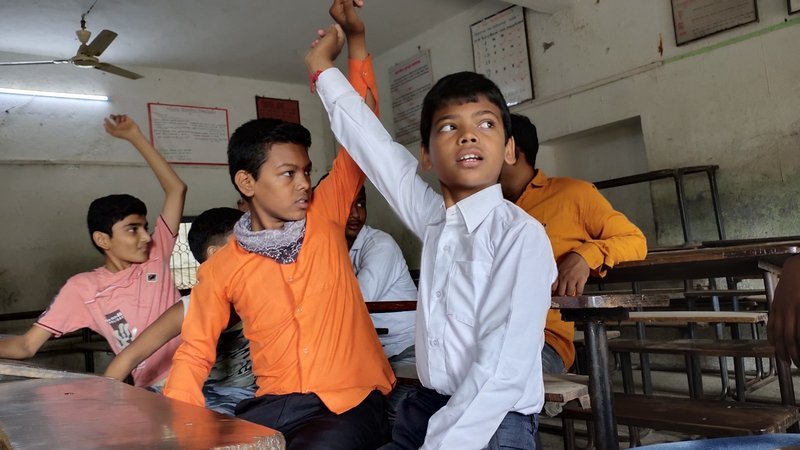
Pair a repeated phrase with a repeated gesture — “Head, Shoulders, Knees and Toes” is the obvious one, but any song with a consistent action-to-word mapping works. The rhythm does something TPR alone doesn’t: it locks the pacing, so weaker students can lean on stronger ones without the activity stalling. Swap in target vocabulary from your current unit rather than sticking to nursery standards once students are past the absolute beginner stage.
3. Command Chains
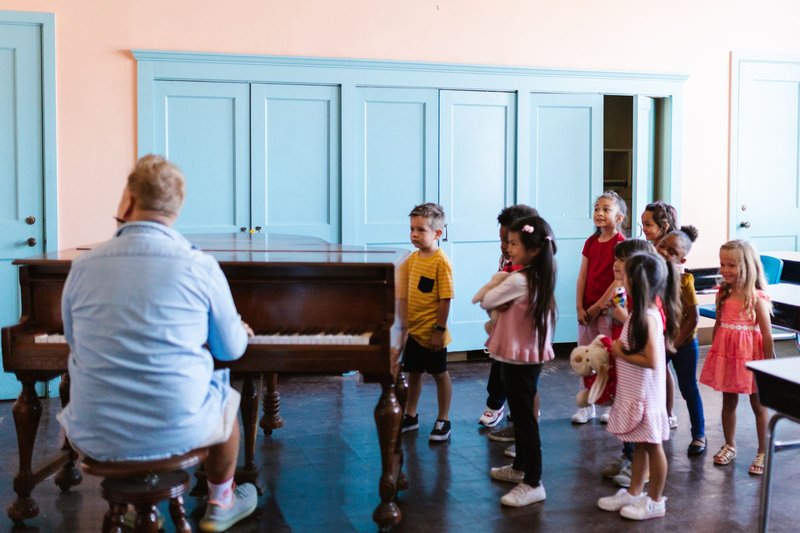
Instead of one instruction at a time, string three or four together: “Stand up, walk to the window, touch the glass, sit back down.” This is where TPR starts doing real work on short-term memory and sequencing, not just vocabulary recall. Start with two-step chains and only add a third step once the class clears two-step chains without hesitation — jumping straight to four steps is the single fastest way to kill a TPR activity’s momentum.
4. Gesture-First Vocabulary Introduction
Before you write a new word on the board, act it out. Introduce “slice,” “stir,” or “pour” with the motion first and the label second, and let students guess the meaning from the gesture before you confirm it. This reverses the usual definition-then-example order, and it works because guessing correctly creates a stronger memory trace than being told an answer outright.
5. Follow My Lead (Mirror Commands)
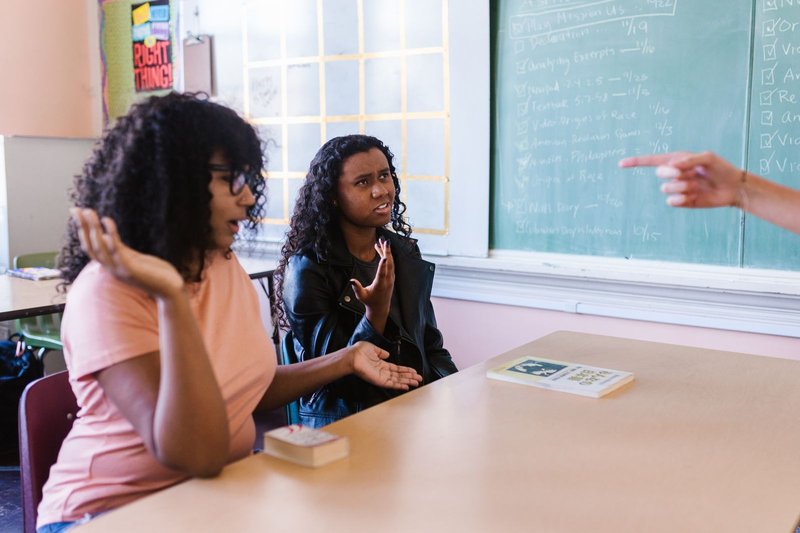
Students mirror the teacher’s movements while a second student calls out what’s happening in real time — “she is touching her nose,” “she is turning around.” This activity does double duty: it drills the present continuous tense, which most curricula introduce right around the same level as basic TPR, and it forces the narrating student to produce language while classmates are still in the silent, movement-only stage.
6. Vocabulary Charades
Standard charades, but scoped tightly to your current vocabulary set rather than open-ended topics. Give one student a card with a target word, and they act it out for the group using body movement only — no props, no drawing. This activity works particularly well as a bridge alongside other vocabulary teaching methods, since it gives students a physical anchor for words they’d otherwise only memorize as flashcard pairs.

7. Obstacle Course Instructions
Set up a simple path through the classroom — chairs to walk around, a line to jump over, a book to step on — and give students directional commands to move through it: “go under the table, jump over the line, walk around the chair.” This is the single best TPR activity for drilling prepositions of movement, a grammar point that resists memorization but sticks fast once a student has physically walked “through” and “around” it.
8. Freeze Dance Vocabulary Review
Play music, call out vocabulary words as students move freely, and stop the music on a command tied to that day’s lesson — “freeze like a robot,” “freeze touching something blue.” It’s a review activity, not an introduction one, so save it for the end of a unit when you need a high-energy way to confirm retention without another written quiz.
Common Mistakes Teachers Make With TPR
The most common one is turning it into a lecture with occasional gestures thrown in. TPR only works when the movement carries the meaning — if you’re explaining a command in the students’ native language before demonstrating it, you’ve already defeated the purpose. Cutting teacher talk time matters more in a TPR activity than almost anywhere else in the lesson, because every sentence you add without a matching action dilutes the comprehension link you’re trying to build.
The second mistake is rushing the silent period. Asher’s model assumes students absorb and respond to commands for a stretch before producing language themselves, but plenty of teachers push for speech the moment a student can follow an instruction. Let comprehension run ahead of production for longer than feels comfortable — the payoff shows up a few weeks later, not in the same lesson.
Making TPR Work in Large or Mixed-Level Classes
Space is the real constraint, not class size. A room of forty can run TPR fine if you’re working with seated commands — touch, point, raise, turn — and save full-body movement for smaller breakout groups or a shared open area. Mixed levels sort themselves out naturally in TPR more than in most activity types, since a beginner can succeed by copying a stronger student’s movement half a beat late without anyone noticing the gap. Pair students of different levels deliberately for command chains, and the stronger student ends up reinforcing the language by modeling it rather than by translating it, which keeps the whole activity in English. For classes where listening comprehension is the bigger gap than vocabulary, run a TPR warm-up before a listening-focused main activity — the movement primes attention in a way that sitting still doesn’t.
שאלות נפוצות
Do I need special equipment for TPR? No. The entire method was designed around classroom objects and student bodies. A ball, a few chairs, and open floor space cover nearly every activity above.
How long should a TPR segment last? Ten to fifteen minutes is the sweet spot for most groups. Longer than that and even young learners start losing focus on the language and treating it as pure physical play.
Can TPR replace grammar instruction? Not on its own. It’s strongest as a comprehension-building and vocabulary-anchoring layer that sits underneath explicit grammar teaching, not a replacement for it.
מקורות
- British Council TeachingEnglish — Total Physical Response (TPR) — overview of Asher’s original command-and-respond model.
- EF Teacher Zone — An Introduction to Total Physical Response — practical classroom framing of TPR for EFL teachers.
- TEFL.net — Variations on TPR for Little Kids — age-appropriate adaptations of the core method.




 HE
HE  EN
EN  ZH
ZH  ZH_CN
ZH_CN  KO
KO  VI
VI  FR
FR  AR
AR  ES
ES  HI
HI  PT
PT  BN
BN  RU
RU  JA
JA  TR
TR  DE
DE  IT
IT  PL
PL  ID
ID  TH
TH  FA
FA  UK
UK  TL
TL  UR
UR  SW
SW  RO
RO  NL
NL  MS
MS  TA
TA  PS
PS  HU
HU  EL
EL  SV
SV  NB
NB  NN
NN  DA
DA  CS
CS  SR
SR  AM
AM