
TPR Examples: 15 Best Total Physical Response Activities
TPR examples are the fastest way to grasp Total Physical Response — the ESL method where students answer commands with whole-body action, no speaking required until they’re ready. James Asher developed TPR at San José State University in the 1960s after he noticed that kids learning a first language understood hundreds of phrases before they ever produced a word. Forty years of follow-up research showed the same pattern in second-language classrooms. The fifteen TPR examples below have been tested in real ESL lessons, from one-on-one tutorials up to forty-student public school groups. If your students freeze when asked to speak, you don’t have a vocabulary problem — you have a silent-period problem, and TPR is the cleanest tool to work through it.

What Is Total Physical Response?
Total Physical Response is a comprehension-first method built on three claims Asher tested across dozens of studies: language is best learned through the body, comprehension comes long before production, and stress kills uptake. The teacher gives a command in the target language — “Stand up,” “Touch your nose,” “Walk to the window” — and students perform the action. The teacher models first, the students copy, and after enough repetitions the language becomes wired to the movement. Nobody is forced to talk.
The classic Asher demonstration starts a beginner sitting in a chair. Inside fifteen minutes the same student is following twenty-command chains in a language they had never heard that morning. The reason it works is the bit teachers usually skip — the silent stage. When learners are not pressured to respond verbally, the cognitive load drops to where the brain can actually file new words instead of panicking.
Why TPR Works for ESL Learners
The research base is older than most teaching methods on the shelf. Asher’s 1969 paper in The Modern Language Journal reported that adult learners taught with TPR remembered 80 to 90 percent of target vocabulary two weeks later, compared with 30 to 50 percent for groups taught through repetition drills. Replications in Spanish, Russian, and Japanese classrooms got similar numbers. Modern embodied-cognition research from the University of Tübingen confirmed the effect — learners who acted out new verbs recalled them roughly 40 percent more accurately at the one-year mark than learners who only read or heard the same verbs.
The classroom payoff is bigger than retention. TPR pulls anxiety out of the early stages of acquisition, and a less stressed brain is a brain that listens. That matters most in mixed-level groups, with adult learners who hate making mistakes in front of peers, and with children whose attention spans cannot survive a worksheet drill. The truth is, plenty of teachers dismiss TPR as “just for kids” and end up with the quietest adult class in the building. The method scales further up than people think.
15 TPR Examples Every ESL Teacher Should Know
The list below covers warmers, vocabulary blocks, grammar reinforcement, and full-lesson frameworks. Every activity has been tested in real classrooms with class sizes from one-on-one private lessons up to forty-student public school groups. Pick three to start, and rotate them rather than running all fifteen in the same week.
1. Simon Says with Target Vocabulary
The default warm-up. Run it for five minutes at the start of class to lock in body-part, action, or classroom-object vocabulary. The “Simon says” prefix forces a comprehension check — students must filter the command, not just react. Add a layer for advanced learners by switching to “Teacher says” for a week, then “The astronaut says” — same mechanic, fresh attention.
2. Stand Up, Sit Down
The simplest possible TPR drill, but it doubles as a comprehension checker. State a sentence, true or false. If true, students stand; if false, they sit. Works for grammar review (“There is a window in this room”), vocabulary (“A dog has wings”), and reading comprehension after a short text. It also kills the after-lunch slump in three minutes.
3. The Command Chain
Give a string of three to five commands without pausing — “Stand up, walk to the door, knock twice, come back, sit down.” Students must hold the sequence in working memory and execute it in order. This is the activity Asher used in his original demonstrations because it forces the brain to chunk language, which is exactly what fluent listeners do automatically.
4. Body Part Tag
For young learners. The teacher calls “elbow to knee” or “thumb to nose” and students touch the right combinations as fast as possible. Add a partner version where students touch their partner’s matching body part. Hits vocabulary, prepositions, and pronouns in one move.
5. Action Verb Charades
Pre-teach ten to fifteen action verbs with a TPR drill. Then put the verbs on cards and have students draw, act, and let the class guess. The reversal — moving from comprehension into production — is where TPR feeds the next stage of acquisition. Don’t skip it.

6. Classroom Object Hunt
Give commands that send students around the room: “Touch something blue. Point to the clock. Walk to a book with a red cover.” Layers vocabulary, prepositions, and adjectives onto the same activity. For online classes, students hold up matching objects from their home — the at-home version is actually richer because every house has different stuff.
7. Storytelling Through Action
Read a short story slowly. Each time a verb comes up, students act it out. Works beautifully with simple folktales — Goldilocks, the Three Little Pigs, the Tortoise and the Hare. The narrative gives the verbs context, and the acting forces students to keep listening for the next cue.
8. The TPR Story Builder
An extension of activity seven. The teacher narrates and students mime, but every two minutes the teacher pauses and the class invents the next sentence collaboratively. The teacher then narrates that new sentence and students perform it. Recycles vocabulary in fresh combinations and is exactly the kind of low-stakes speaking practice that nervous learners need.
9. Total Physical Response Bingo
Replace numbers on bingo cards with action images — running, jumping, sleeping, drinking. Call out the verb in the target language and students cross off the matching image. First to a line stands up and performs every action they crossed off. Reinforces vocabulary, comprehension, and recall in a five-minute closer.
10. Pictionary in Motion
Same as classic Pictionary, except the artist mimes instead of drawing. Excellent for teaching emotion vocabulary, weather words, and abstract verbs that are hard to draw — “argue,” “celebrate,” “consider.” Forces creative comprehension and is the activity adult learners most often request the second time around.

11. Pass the Ball
Students stand in a circle. The teacher calls an action — “Pass the ball over your head, under your leg, around your back.” The ball moves while the class listens. Compounding directions sharpens preposition use and is one of the rare activities where every student is paying attention because the ball is coming their way.
12. Direction Mazes
Set up a path with chairs and cones. Blindfold one student. A partner gives directions in English — “two steps forward, turn left, three steps back.” Tests imperative forms, prepositions of place, and numbers in one shot. The blindfolded student listens harder than they ever did in a textbook drill, because the consequence of mishearing is bumping into a chair.
13. TPR Yoga
For adult learners or older teens who are too cool for Simon Says. Walk students through ten yoga poses in English: “raise your arms, fold forward, step your right foot back.” Combines body-awareness vocabulary with calm focus, and the physical reset works wonders in evening adult classes when everyone arrives drained from work.
14. The Cooking Demonstration
Bring real ingredients or props and walk through a recipe — “peel the banana, slice it into rounds, put them in the bowl, pour in the yogurt, stir twice.” Students perform each step at their desks with their own materials. Hits sequencing words, cooking verbs, and quantifiers in a context that learners actually use outside class.
15. The Classroom Roleplay Reverse
Students become the teacher. One learner gives the commands; the rest of the class — and the actual teacher — perform them. This single shift moves students from receptive to productive language without ever making it feel like a test. It’s the bridge from comprehension into output, and most TPR plans stop one step too early by skipping it.
How to Plan a TPR Lesson Step-by-Step
A TPR-led lesson follows the same arc Asher mapped out in 1977: teacher models, students follow silently, students take over commands. Skip any step and the method falls apart. Plan in three blocks.
Modelling block (5–10 minutes). Pick six to eight target items — verbs, body parts, classroom objects — and demonstrate each command yourself. Students watch. No talking, no writing. The point is to anchor sound to action without the noise of explanation.
Group response block (10–15 minutes). Repeat the commands. Students perform alongside you. Mix the order, build chains, slow down for difficult items. If a student hesitates, model again — don’t translate, don’t elicit. Translation here breaks the comprehension-first principle and trains learners to wait for L1 support.
Production block (10 minutes). Hand the commands over. One student leads, the rest follow. Errors are fine and don’t get corrected mid-flow — the bigger payoff is that the learner just produced unprompted target language in front of peers. Recast quietly at the end.
TPR for Different Age Groups
The activities flex up and down the age spectrum, but the framing changes hard. Young learners need movement to stay regulated; adults need a reason to stand up. Skip the framing and you’ll lose half the room.
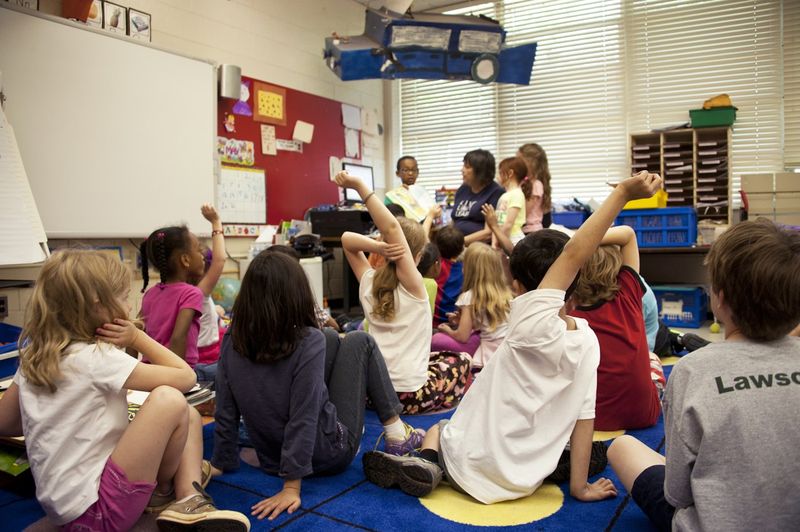
For preschool and early elementary, TPR adalah the lesson. Build full thirty-minute classes around action chains, songs with movements, and storytelling-through-mime. Children at this stage are wired to imitate, and asking them to sit still through a drill is a fight you’ll lose. For middle elementary, TPR runs the warm-up and vocabulary block, with reading and writing layered in afterward.
For teenagers, frame it as a game or a competition. “Simon Says” lands flat with a fifteen-year-old, but a points-based team version with elimination rounds works fine. For adults, TPR fits into the first ten minutes of class as physical activation, or as a discreet drill inside a longer lesson — for example, when teaching prepositions, get learners up to actually walk around objects rather than circling them on a worksheet. Frame it as a memory boost, not a kids’ activity, and adult learners buy in fast.
Common TPR Mistakes ESL Teachers Make
Three things go wrong consistently. The first is translation. The moment a teacher slips in an L1 gloss — “stand up, 站起來” — the comprehension-first wiring breaks. The brain stops working out the English from context and starts waiting for the translation. Resist it. Mime harder.
The second mistake is rushing into production. A student who has performed a command three times in silence is not ready to give that command back. They need ten or fifteen successful performances first. Asher’s research found the silent-to-spoken ratio sits around 70/30 for the first month of any new vocabulary set — push faster than that and uptake collapses.
The third mistake is one-and-done vocabulary. TPR works because of spaced, embodied repetition. A verb taught with TPR on Monday and never revisited until Friday’s quiz will not stick. Recycle target items across at least three lessons in the same week, ideally as a five-minute warm-up rather than a fresh lesson chunk.
When TPR Doesn’t Work
The honest answer: TPR has limits. It’s strongest with concrete vocabulary and imperative forms. It struggles with abstract nouns, conditional clauses, modal verbs, and most discourse-level grammar. You can mime “if it rains, I will stay home” — barely — but the activity becomes more theatre than language teaching.
TPR also runs out of steam past the high-intermediate level. Once learners can sustain spontaneous conversation, the comprehension-first scaffolding becomes redundant. By B2, TPR survives as a vocabulary warm-up and a state-changer, but stops being the engine of the lesson. Use it as one tool in a method stack alongside the PPP lesson plan framework Dan pengajaran bahasa komunikatif. None of the methods is complete on its own.
A Sample TPR Lesson Plan: Teaching Action Verbs
Here’s the skeleton I use for a forty-five-minute beginner lesson on ten target verbs — run, walk, jump, sit, stand, write, read, drink, eat, sleep.
Minutes 0–3: Greet and a quick energizer. Three rounds of Stand Up Sit Down to wake the class up.
Minutes 3–13: Modelling block. Demonstrate each of the ten verbs with a clear action. Repeat each verb three to four times while students watch silently.
Minutes 13–28: Group response. Call each verb; class performs. Then mix the order. Then build a chain — “stand up, walk, jump, sit.” Then turn off the modelling and let students respond to the verb alone.
Minutes 28–38: Activity rotation. Action Verb Charades for five minutes, then a round of TPR Bingo for five.
Minutes 38–45: Production block. Students lead. Hand the verb cards to volunteers and let them command the class. End with one student writing the ten verbs on the board, with no teacher help, as informal recall.
If you’re new to running movement-heavy lessons, pair TPR with scaffolded prompts so weaker learners always have a fallback to match. The two methods complement each other — TPR plants the vocabulary, scaffolding makes sure it transfers into reading and writing.
TPR Online: Can It Survive Zoom?
Most teachers I trained over the past four years assumed TPR would die in online classes. It didn’t. The method actually adapted well, with two tweaks. First, the teacher needs the camera framed wide enough to show full-body actions — a webcam pointed at your face won’t cut it. Second, the activities shift toward things learners can do at their desk: touch household objects, hold up colours, mime small actions in frame. The Object Hunt activity works better online than in person because every house has different things to grab.
Where online TPR fails is in class sizes above twelve. The lag between command and response stacks up, and one student’s wifi cutting out drags everyone else. For online groups, cap TPR activities at eight learners or split into breakout rooms with a co-teacher leading the smaller groups.
Final Word on Total Physical Response
The teachers who get the most out of TPR are the ones who run it for the long haul. A single demo lesson won’t show you what the method can do. Run it as a five-minute warm-up every day for a month, and the difference in your students’ listening comprehension will be obvious — measurably so if you compare end-of-month dictations against your first-week baseline. Try one of the fifteen activities above tomorrow morning. Stick with it for three weeks. Then run a comprehension check and see what changed.
Sumber
- Asher, J. (1969). The Total Physical Response Approach to Second Language Learning. The Modern Language Journal — Original research paper introducing TPR.
- TPR World — Sky Oaks Productions — James Asher’s publishing house and research archive.
- British Council TeachingEnglish — Total Physical Response (TPR) — Classroom-focused guidance from the British Council.
- Colorín Colorado — Total Physical Response — Practical strategy library for ELL classrooms.
- The Teacher Toolkit — TPR Strategy Card — Reference card for classroom implementation.






 ID
ID  EN
EN  ZH
ZH  ZH_CN
ZH_CN  KO
KO  VI
VI  FR
FR  AR
AR  ES
ES  HI
HI  PT
PT  BN
BN  RU
RU  JA
JA  TR
TR  DE
DE  IT
IT  PL
PL  TH
TH  FA
FA  UK
UK  TL
TL  HE
HE  UR
UR  SW
SW  RO
RO  NL
NL  MS
MS  TA
TA  PS
PS  HU
HU  EL
EL  SV
SV  NB
NB  NN
NN  DA
DA  CS
CS  SR
SR  AM
AM