
Peer Feedback in ESL: 8 Strategies That Work
I ran ESL peer feedback the lazy way for two years: “turn to your partner and check their work.” Half the room finished in ninety seconds with nothing written down. The other half argued in Chinese about whose English was worse. Neither group learned anything, and I blamed the students instead of the activity. The fix wasn’t more enthusiasm — it was four concrete pieces of scaffolding that turn a vague instruction into something a 12-year-old or a 40-year-old business-English client can actually execute.
Why “Trade Papers and Comment” Fails for ESL Peer Feedback
Ask a room of English learners to “give feedback” and most will write nothing, copy the teacher’s tone from past corrections, or go quiet rather than risk sounding rude to a classmate. This isn’t a motivation problem. It’s a language and training gap — most students have never been taught the actual phrases for giving feedback in English, so they default to silence or a flat “it’s good.”
A 2023 study on peer-assisted learning with Taiwanese university students found that structured peer review sessions produced measurably better reading comprehension gains than unstructured pair work, but only when students received explicit training in the review process first. The training, not the pairing, was the variable that mattered. That single finding reframes the whole activity: peer feedback isn’t something you assign, it’s something you teach.
There’s a second failure mode that shows up even after you add structure: students treat the activity as a compliance task instead of a language task. They’ll fill in three boxes on a form because the form exists, not because they engaged with the writing. The difference between a form that gets filled out and a form that produces real feedback usually comes down to whether the teacher modeled the activity first and whether the feedback itself carries any weight toward a grade — both covered below.
Teach the Feedback Language First
Before any peer feedback round, put five to eight sentence frames on the board and drill them out loud as a class. Split them by level so nobody reaches for language above their ability:
- Elementary: “I like how you used ___.” / “Can you explain ___ more?” / “I don’t understand this part.”
- 中級: “This sentence would be clearer if ___.” / “I noticed you repeated ___ — try replacing it with ___.” / “What did you mean by ___?”
- 高度な: “Your argument in paragraph two would be stronger with an example.” / “The transition between these ideas feels abrupt — consider adding ___.” / “This word choice doesn’t quite fit the tone; ___ might work better.”
Spend five minutes having students practice the frames on a sample paragraph you write yourself, so nobody’s first attempt at the language happens on a classmate’s real work. Write a deliberately mediocre paragraph with two or three fixable issues, project it, and have the whole class generate feedback out loud using only the frames on the board. This single rehearsal does more for the quality of the real activity than any amount of written instructions.

Skipping this step is the single biggest reason peer feedback fails. Students aren’t avoiding the task because they’re lazy — they genuinely don’t have the vocabulary to critique a classmate’s English in English, so they either switch to L1 or say nothing.
Use a Compliment-Suggestion-Correction Protocol
Give every peer review round three fixed categories instead of an open “what do you think.” Compliment: one specific thing that worked. Suggestion: one idea for improvement, phrased as a question or option, not a command. Correction: one factual grammar or vocabulary fix, written exactly as it should appear. Three slots, three sentences minimum, no more wandering commentary.

This differs from the generic “feedback sandwich” most training materials describe. A sandwich just orders two compliments around one criticism — it doesn’t tell students what kind of criticism to give. The compliment-suggestion-correction split forces a language-focused correction alongside the content-focused suggestion, which matters specifically in an ESL context where both the ideas and the English itself need separate attention. See how this pairs with corrective feedback techniques for the direct-correction half of the protocol.
Build a One-Page Feedback Form
A blank space at the bottom of an essay produces blank feedback. A one-page form with three labeled boxes — Compliment, Suggestion, Correction — produces three sentences almost every time, because the form itself is the instruction. Keep the form in English only, print it on a different-colored paper than the essay so it doesn’t get lost in the shuffle, and require a name at the top from both the reviewer and the writer so you can trace accountability later.
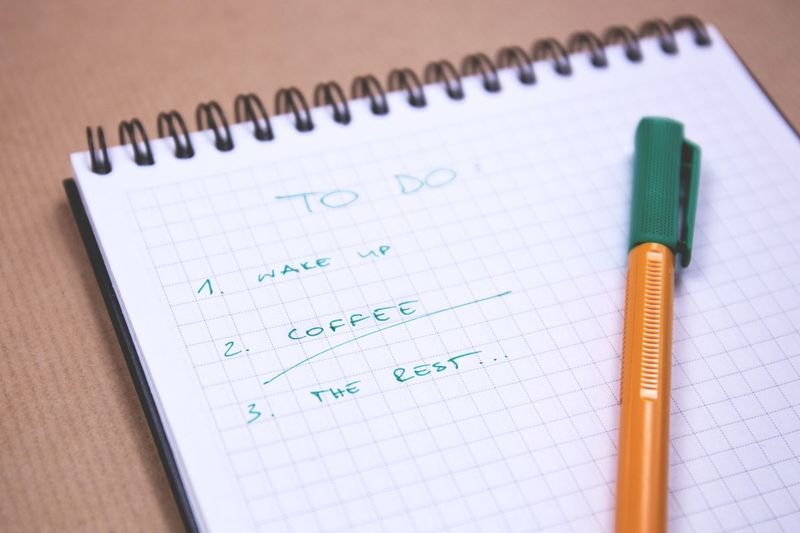
Digital classrooms can run the same form through Google Forms with the three boxes as short-answer fields — the structure matters more than the medium. What doesn’t work is a rubric with five-point Likert scales. Numbers let students avoid writing a single sentence of actual English, which defeats the entire point of a language-focused activity. A form with three labeled text boxes forces language production; a form with five circles to shade forces almost nothing.
Leave a fourth, smaller box at the bottom labeled “Question for the writer.” This one line consistently produces the most useful exchange of the whole activity, because it flips the reviewer from evaluator to curious reader — a role most students find far less threatening to occupy, and far closer to how adult English speakers actually respond to writing.
A filled-in form from an intermediate class looks something like this: Compliment — “I like how you used three examples in paragraph two.” Suggestion — “This sentence would be clearer if you put the reason before the result.” Correction — “You wrote ‘he go to school,’ it should be ‘he goes to school.'” Question for the writer — “Why did you choose this topic?” Four lines, every one of them in English, every one of them specific enough that the writer can act on it immediately. Compare that to the output of an open-ended “what do you think” prompt, which from the same student usually produces a single line: “It’s good, nice story.” The form alone — no extra instruction, no extra class time — is what closes that gap.
Rotate Partners on a Fixed Schedule
Students who always review the same partner’s work start rubber-stamping each other within three or four sessions — the friend pair writes “great job!” regardless of quality, and the pair who don’t get along writes nothing useful out of quiet resentment. Set a rotation before the semester starts: numbered seating, then shift one seat to the right every peer feedback day. Nobody picks their own partner, and nobody reviews the same classmate twice in a row.

A fixed rotation also solves a leveling problem specific to mixed-ability ESL classes: over a six-week cycle, every student eventually reviews work from someone stronger and someone weaker than themselves, which exposes both ends of the class to language they wouldn’t otherwise see.
Fix the Face-Saving Problem Before It Wrecks the Activity
In twenty years of teaching in Taiwan, I’ve watched more peer feedback rounds die from face-saving than from lack of English ability. Publicly pointing out a classmate’s grammar mistake can read as an attack in a culture where group harmony outranks individual correctness, and students who sense that will either soften every comment into uselessness or refuse to write anything critical at all. Most peer-feedback guides written for Western classrooms don’t mention this because it isn’t their problem.

The fix is making every correction written, never spoken aloud in front of the group, and framing the Correction category as “the English fix,” not “your mistake.” That small reframe — fixing the language instead of judging the person — is usually enough to get honest written corrections out of students who would otherwise stay silent to protect a classmate’s standing in the room.
A second fix matters just as much: keep reviewer and writer names on the form but never read corrections aloud by name, even in a debrief. The moment a correction becomes a spoken, public event, the activity stops being about language and starts being about status — and status is exactly what a face-saving culture protects hardest. Written, private, and attached to a form a student can fold up and keep solves most of this on its own.
Run a Fishbowl Demo Before Turning Students Loose
Pick two confident students, give them a sample paragraph, and have them run the full compliment-suggestion-correction protocol out loud in front of the class before everyone else starts. The rest of the room watches, not participates — this is modeling, not practice. A fishbowl format works because students copy tone and pacing far more accurately from watching two peers than from reading an instruction sheet.

Brief the two demo students privately beforehand so they know roughly what to say — this isn’t improvisation, it’s a scripted preview. Have the writer student read their paragraph aloud, then walk the reviewer through all three protocol steps in order while the class listens. Stop after each step and ask the room “what category was that?” to keep everyone tracking the structure instead of just watching passively.
The video below runs through the same idea from a different classroom, worth watching once before you try the demo yourself for the first time:
Ten minutes of fishbowl demo on day one saves fifteen minutes of confused silence on every peer feedback round that follows it for the rest of the term.
Grade the Feedback, Not Just the Final Draft
If peer feedback doesn’t count toward a grade, most students treat it as filler time. Attach two or three points to the feedback form itself — did the reviewer fill in all three categories, is the correction specific and accurate, did they write in full sentences — separate from whatever grade the original essay earns. This single change does more to fix lazy feedback than any amount of instruction about effort.
Collect the forms, not just the essays, and skim them before returning anything. A form with three generic lines (“Good job. Nice writing. Keep it up.”) gets zero of the three feedback points and a quick one-on-one reminder of what specific looks like. A form with a real correction and a genuine question gets full marks, and reading a handful aloud — anonymously, never by name — at the start of the next class shows the room what the bar actually is.

Pair this with cooperative learning activities that already build in group accountability, and peer feedback stops feeling like a bonus activity and starts functioning as a graded, repeatable part of the writing cycle — which is the only way it survives past the third week of the semester.
Peer feedback in an ESL classroom isn’t a trust exercise. It’s a language task that needs the same scaffolding as any other: taught vocabulary, a fixed structure, a visible model, and a grade that makes the work worth doing. Build those four pieces once and the activity runs itself for the rest of the year.
情報源
- Enhancing ESL learners’ literacy by peer-assisted learning strategy of online English news — PMC, National Center for Biotechnology Information
- 6 Strategies for Effective Writing Feedback in ELT — TESOL International Association
- Giving Feedback to Language Learners — Cambridge University Press








 JA
 EN
 ZH
 ZH_CN
 KO
 VI
 FR
 AR
 ES
 HI
 PT
 BN
 RU
 TR
 DE
 IT
 PL
 ID
 TH
 FA
 UK
 TL
 HE
 UR
 SW
 RO
 NL
 MS
 TA
 PS
 HU
 EL
 SV
 NB
 NN
 DA
 CS
 SR
 AM