
Total Physical Response: 25 Proven TPR Activities (2026)
Total Physical Response is the language teaching method James Asher built in 1965 at San José State, and it still does something almost nothing else does in an ESL classroom: it gets brand-new learners producing comprehension before they’re forced to produce words. You give a command — “stand up,” “touch the door,” “point to your friend” — and the class moves. No translation. No drilling. No anxiety. That’s TPR in one paragraph. The rest of this guide is how to actually run it: 25 activities, a commands list you can use tomorrow, a sample lesson plan, and an honest take on when TPR is the wrong tool.

What Is Total Physical Response?
Total Physical Response (TPR) is a language teaching method that pairs spoken commands with physical actions, so learners build comprehension through movement before they’re asked to speak. Asher published the first formal study on it in 1969 in The Modern Language Journal, arguing that adults learn second languages the same way infants learn their first — by listening, watching, and responding with their bodies long before they utter a sentence. He called the silent stretch before output the “comprehension period,” and TPR is engineered to extend it.
In practical terms, a teacher says “open your book” and opens a book. The class copies. A few minutes later, the teacher says “open your book” without modelling — and the class still opens their books. That moment, when students respond correctly to language they’ve never produced themselves, is the moment Asher built his entire method around.
How the TPR Method Actually Works

The TPR method works in three loose stages, and skipping any of them is how teachers accidentally turn it into charades.
Stage one is modelled input. The teacher says a command and performs the action at the same time. Students watch. They are not expected to respond. This stage is shorter than people think — sometimes two repetitions is enough.
Stage two is guided response. The teacher gives the command and gestures for the class to perform it. The teacher may or may not perform alongside them, but the model is fading. This is the longest stage, and the one where comprehension is actually being built.
Stage three is independent response. The command is given without any visual support. Students respond from comprehension alone. Asher’s research showed that the cleaner this final stage is, the more durable the language gets — and the faster spontaneous speech tends to emerge weeks later.
One thing worth flagging: the order matters more than the speed. A beginner class can move through all three stages with five new verbs in a single session. A class of older learners with abstract vocabulary might spend three sessions on stage two before stage three even makes sense.
25 Total Physical Response Activities for Any ESL Classroom
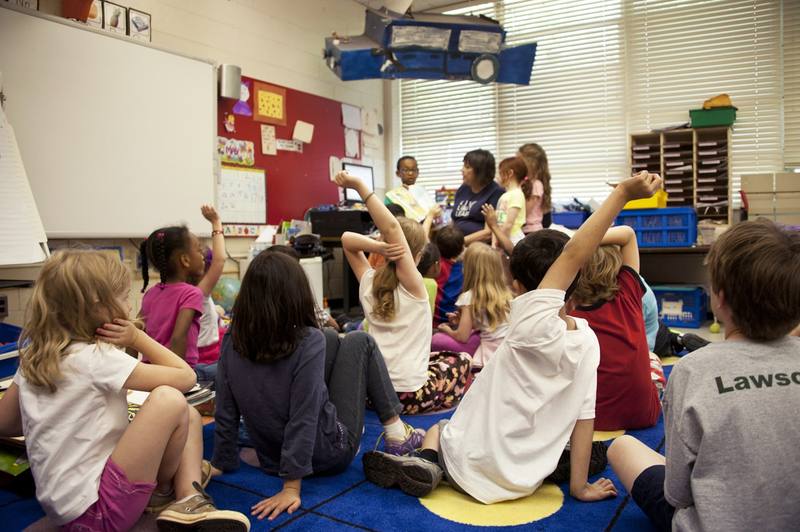
Most TPR activity lists online stop at four. Here are 25 that I’ve either run or watched run in real ESL classrooms across Taiwan, sorted by level so you can pick the right one without scanning the whole list.
Beginner TPR activities (ages 4–10, A0–A1)
- Simon Says — the classic. Pure stage-three TPR with a built-in attention check. Drop “Simon says” once a minute to force real listening.
- Body Parts Touch — teacher calls “touch your nose / elbow / knee” at increasing speed. Adds adjectives later: “touch your left ear.”
- Classroom Object Race — “run to the window, then to the door, then to the whiteboard.” First runner to finish the full string wins. Trains chained instructions.
- Stand Up If — “stand up if you like apples.” Students who agree stand. Combines comprehension with personalization.
- Colour Hunt — “find something red and bring it to me.” Builds noun + adjective combinations under pressure.
- Action Songs — Head Shoulders Knees and Toes is TPR set to music. So is The Wheels on the Bus, with hand actions.
- Animal Walks — “walk like a duck, jump like a frog, sleep like a cat.” Movement + verbs + animals in a single loop.
- Mirror Me — teacher performs an action while narrating it in English. Class mirrors silently. Pure stage-one input.
- Flashcard Slap — flashcards on the floor or table. Teacher calls a word. Students race to slap the matching card.
- Where Is It? — teacher hides an object. Class follows directions: “go forward, turn left, stop, look down.”
Intermediate TPR activities (ages 10+, A2–B1)

- Recipe Demonstrations — give a sequence of cooking commands. “Take the bowl. Add two eggs. Stir slowly.” Brings food vocabulary to life without props if you mime it well.
- Origami TPR — paper folding step by step. Every command is a real instruction, and the proof of comprehension is the finished crane.
- Dance Routines — short 8-count routines built from English commands. “Step right, clap twice, turn around, bow.”
- Yoga in English — pose names as commands. “Stretch your arms up, bend forward, touch the floor.” Calmer than dance, same comprehension load.
- Build a Tower — pairs follow taped instructions to construct a block tower they can’t see the model of. Tests listening under pressure.
- Treasure Map — students follow spoken directions across a classroom map to find a hidden item. Cardinal directions are easier to teach this way than any worksheet.
- Story Mime — teacher narrates a short story. Volunteers mime each action as it’s mentioned. Brings narrative tenses into the body.
- Drawing Dictation — students draw what they hear. “Draw a circle in the middle. Draw two eyes inside the circle.” Bridges TPR into reading/writing.
- Classroom Yoga Sequence — a 90-second pre-class wake-up routine in English. Doubles as classroom management.
- Daily Routine Pantomime — students act out “I wake up, I brush my teeth, I eat breakfast” as they hear the verbs.
Advanced TPR activities (teens and adults, B1+)
- Assembly Instructions — give learners IKEA-style assembly directions for a paper model. Authentic instructional language, zero translation.
- Mock Emergency Drill — “evacuate quietly, line up against the wall, count off in English.” High-stakes language in a low-stakes context.
- Workplace Role-Play with Movement — receptionist greets, customer enters, hands over a form, sits down. Each phrase tied to a real action.
- Conditional TPR — “if I clap once, stand up. If I clap twice, sit down.” Conditional grammar internalized through the body.
- Phrasal Verb Pantomime — pairs draw phrasal verbs (put on, take off, look up, sit down) and act them. The class names the verb. Phrasal verbs are physical by nature, and this exposes that.
If you want a deeper bench of movement-based options for warmers and energizers, the 15 ESL warm-up activities list pairs well with this — half of them are TPR variants in disguise.
A TPR Commands List You Can Steal Today
Every teacher who tries TPR for the first time stalls at the same point: they run out of commands by minute three. Print this list, tape it inside your planner, and stop stalling.
Body movement: stand up, sit down, turn around, jump, hop, walk, run, march, tiptoe, crawl, bow, stretch, freeze, dance, sway.
Body parts: touch your head, touch your nose, touch your knees, point to your elbow, shake your hand, wave, clap, snap, blink, smile, frown.
Classroom directions: open your book, close your book, pick up your pencil, put down your pencil, write your name, raise your hand, push in your chair, line up at the door.
Spatial: go forward, go back, turn left, turn right, look up, look down, stand next to, sit behind, move in front of, hide under.
Object manipulation: hold the ball, pass the ball, drop the marker, catch the eraser, place the book on the desk, hand me the paper, point to the map.
That’s 50 commands sorted into categories. Add three new ones every lesson and you have a year of TPR fuel.
A Sample TPR Lesson Plan (Step by Step)
The cleanest TPR lesson plan I’ve seen used in Taipei runs 40 minutes and teaches five new verbs. Topic: classroom verbs (stand, sit, jump, point, walk). Level: beginner kids, ages 6–8. Here it is.
Minute 0–5 — Greeting and review. Old TPR commands only. “Stand up. Sit down. Wave hello.” Builds confidence before new input arrives.
Minute 5–12 — Modelled input (stage one). Teacher says “jump” and jumps. Says “point” and points at the door. Repeats each verb three times with the action. No expectation of response.
Minute 12–22 — Guided response (stage two). Teacher says the verb and gestures the class into it. After two rounds, teacher stops modelling and only gives the command. Mix verbs randomly to prevent rote memorization of order.
Minute 22–32 — Independent response and game (stage three). Play Simon Says using the five new verbs. The students who respond to non-Simon commands sit out for one round, then rejoin.
Minute 32–38 — Bridge to literacy. Write the five verbs on the board. Point to each one and act it out once. Then point to one without saying it — class performs the action from the written word. This is the first step toward reading comprehension, and it works only because the bodies already know what the words mean.
Minute 38–40 — Cool down. One final round of mixed commands, including the new five. Wave goodbye in English.
If you want a more formal scaffold to drop this into, the 5-stage ESL lesson plan template maps cleanly: TPR fills the presentation and controlled practice slots.
TPR for Teenagers and Adults (Yes, It Works)
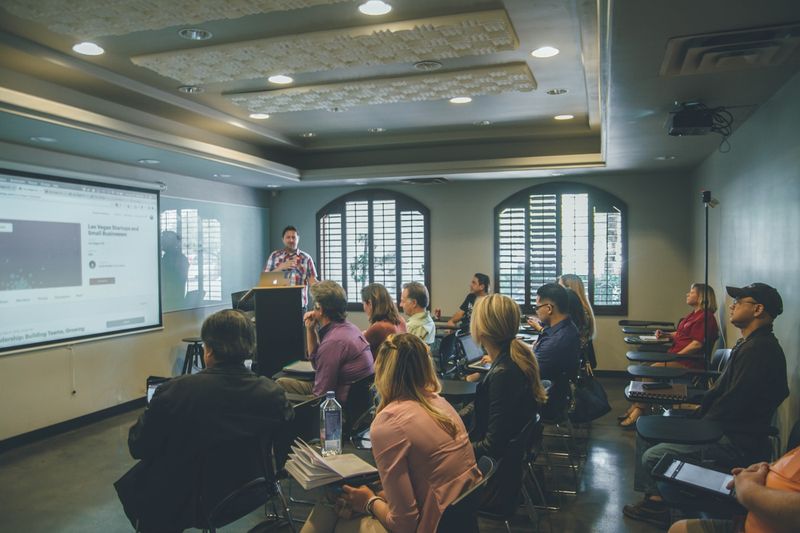
The most stubborn myth about TPR is that it’s a kids-only method. Asher’s original studies used adult learners, and the comprehension gains were larger than what he later measured in children. The reason teachers think TPR fails with teens and adults is that they run a six-year-old’s lesson on a thirty-five-year-old. The commands look silly, the modelling feels patronising, and the class shuts down within minutes.
The fix is to swap the context, not the method. Adults will absolutely follow TPR commands in a recipe demo, an emergency drill, a yoga sequence, or an office role-play. They will not stand up and pretend to be a frog. Keep the comprehension-first sequence, drop the cartoon energy, and pick contexts that respect their age.
The truth is, most adult ESL teachers skip TPR not because it doesn’t work but because it requires them to stop talking and start performing. The teachers who push through that discomfort almost always report faster vocabulary retention than they got from translation-based drilling.
TPR Storytelling (TPRS): The Big Extension
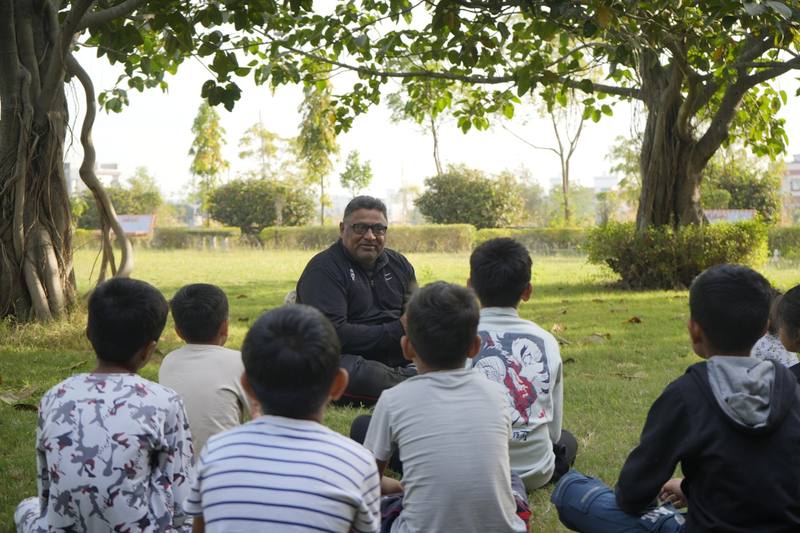
In the 1990s a high school Spanish teacher named Blaine Ray noticed that classic TPR ran out of road around the 100-word mark. Once you’ve taught walking, jumping, pointing, and a dozen body parts, what’s next? Ray’s answer was to graft narrative onto Asher’s input-first sequence. He called it TPR Storytelling, or TPRS.
In a TPRS session, the teacher narrates a short, exaggerated story while students act out every verb and noun. “There was a boy. The boy had a dog. The dog ran to the door. The boy followed the dog.” Volunteers play the boy and the dog. The class chants key vocabulary. The teacher asks comprehension questions in the target language (“Who ran to the door?”) and the class shouts answers.
TPRS is harder to run than basic TPR — you need to plan the story, prep the vocabulary in advance, and tolerate some chaos. But it scales TPR into intermediate-level grammar without losing the kinaesthetic core.
Advantages and Disadvantages of TPR
TPR’s advantages show up in the first lesson. It lowers the affective filter dramatically — students who refuse to speak will happily move. It builds long-term retention because vocabulary is encoded with motor memory, not just acoustic memory. It works across languages, ages, and class sizes. And it’s free, which matters in a profession where every paid resource is one more thing to chase down.
The disadvantages are real too. TPR is heavily skewed toward concrete vocabulary — verbs and physical nouns dominate, while abstract concepts (justice, opinion, regret) resist the method. It doesn’t naturally produce spoken output, only comprehension; teachers have to layer in separate speaking practice or wait weeks for it to emerge. And it relies on a teacher who is willing to look slightly ridiculous in front of a class, which is a higher bar than it sounds.
The British Council’s TPR overview makes a similar point: TPR is best treated as one tool in a mixed methodology, not a complete approach. That matches what most working teachers find.
When TPR Isn’t the Right Tool
I’ll take a mild position here. TPR is wrong for three specific scenarios, and pretending it isn’t wastes class time.
First, exam prep classes where the bottleneck is written grammar accuracy and not vocabulary comprehension. TPR won’t teach the past perfect’s subtleties.
Second, mixed-level classes where the advanced learners have already mastered the concrete vocabulary you’re TPR-ing. They’ll disengage within five minutes, and you’ll lose them for the lesson.
Third, online classes with strict camera-off policies. TPR collapses without visual feedback. If you can’t see the room, switch to something built for the medium.
Outside those three cases, TPR earns its place. Layer it in alongside vocabulary games, controlled speaking practice, and reading work, and the gains compound.
Watch TPR in Action
Cambridge University Press’s short demo shows a TPR teacher running stages one through three with a class of beginners in under three minutes. It’s the cleanest example I’ve found online.
The Next Move
Pick five verbs for tomorrow’s class. Pick five commands you’ll model, gesture, and then drop. Run the three stages in order, even if the third one only takes thirty seconds. You’ll feel it land — the class quiets, eyes lock on, and a few students respond to a verb you haven’t taught yet because they pieced it together from the action. That’s the moment Asher was chasing in 1965, and it still happens every time the method is run cleanly.
情報源
- Total Physical Response — Wikipedia — historical overview of Asher’s method and its development.
- Total Physical Response — TPR | TeachingEnglish | British Council — practitioner-focused TPR primer with classroom advice.
- Total Physical Response | Colorín Colorado — strategy library entry with notes on gesture use and culturally responsive adaptations.
- TPR World — James J. Asher — the official site maintained by Asher’s organization, with original research references.
Looking for free ESL worksheets? Browse our full collection — printable resources for every level and age group. Browse Free Worksheets →
Students can access free worksheets and reading materials at 18KEnglish.com.




 JA
JA  EN
EN  ZH
ZH  ZH_CN
ZH_CN  KO
KO  VI
VI  FR
FR  AR
AR  ES
ES  HI
HI  PT
PT  BN
BN  RU
RU  TR
TR  DE
DE  IT
IT  PL
PL  ID
ID  TH
TH  FA
FA  UK
UK  TL
TL  HE
HE  UR
UR  SW
SW  RO
RO  NL
NL  MS
MS  TA
TA  PS
PS  HU
HU  EL
EL  SV
SV  NB
NB  NN
NN  DA
DA  CS
CS  SR
SR  AM
AM