
Community Language Learning: 7 ESL Techniques
Curran wasn’t an applied linguist. He was a Jesuit priest and counseling psychologist at Loyola University Chicago, and he built Community Language Learning by borrowing directly from group counseling theory. The result looks nothing like a standard ESL lesson: no textbook open on the desk, no vocabulary list on the board, just a circle of students and a recorder in the middle. For teachers tired of watching anxious adult learners freeze up mid-sentence, CLL is worth understanding even if you never run a full lesson by the book. Pieces of it — the circle format, the recorded conversation, the student-generated transcript — slot into almost any speaking class.
What Is Community Language Learning, Really?
Community Language Learning sits inside what linguists call the humanistic wave of language teaching — the same family as the Silent Way na Suggestopedia, all of which emerged in the 1970s as a reaction against drill-heavy Audio-Lingual teaching. Where those two methods lean on silence or relaxation, CLL leans on the emotional safety of a counseling relationship. Diane Larsen-Freeman’s classic breakdown of the method describes the teacher’s job as reducing the “threat” of language learning by standing outside the circle, ready to help, never correcting in front of the group.
The core unit of a CLL lesson isn’t a grammar point. It’s a conversation the students actually want to have. Students pick the topic, speak in their first language when they get stuck, and the teacher — the “knower” — feeds back the English equivalent in a quiet, non-threatening tone. Over a five-stage cycle, that raw conversation becomes a recording, then a transcript, then a shared language-analysis document the class built together.
Curran called this process “Counseling-Learning” before the name Community Language Learning stuck, and the counseling framing explains a lot of the method’s odd-looking rules. In group therapy, the counselor doesn’t hand clients a script — they help clients articulate what’s already on their mind. Curran applied the same logic to language: the knower never introduces vocabulary a student didn’t ask for. Reliance on the first language is expected to shrink gradually across a course, not get banned on day one. A beginner might lean on the knower for every sentence in week one and barely need the circle by week eight — that drop in dependence is the actual measure of progress, more than any vocabulary quiz.
1. The Circle and the Knower
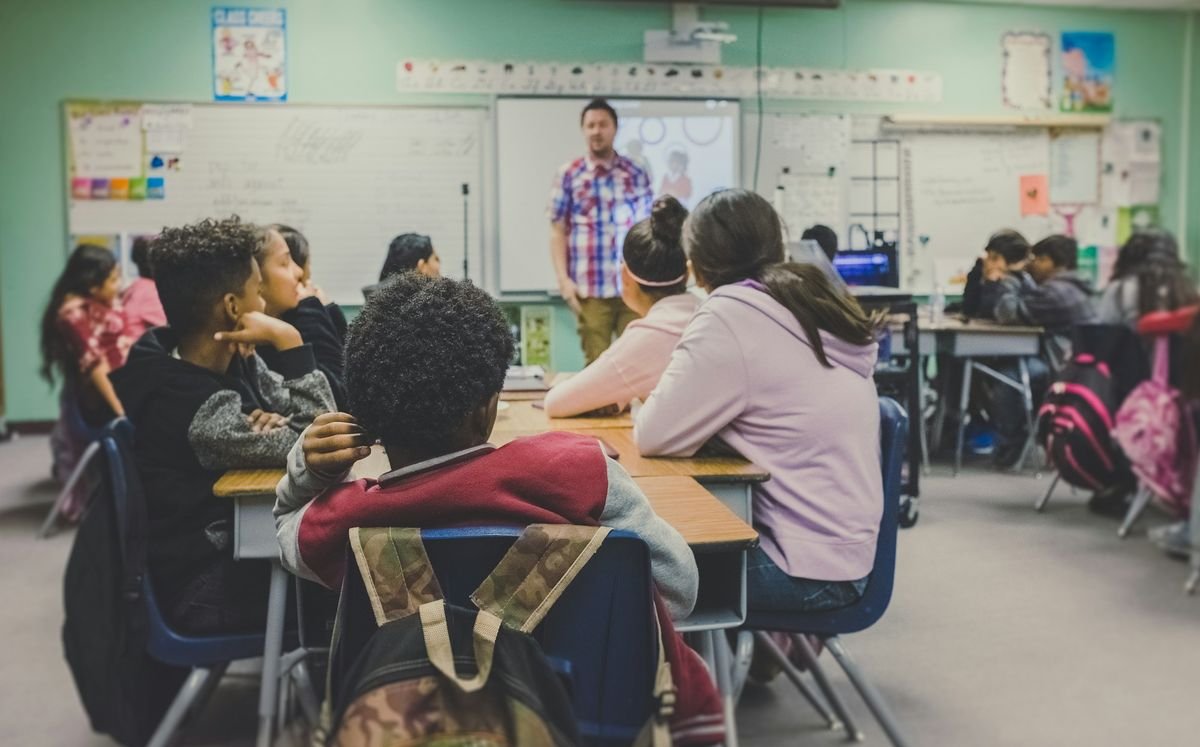
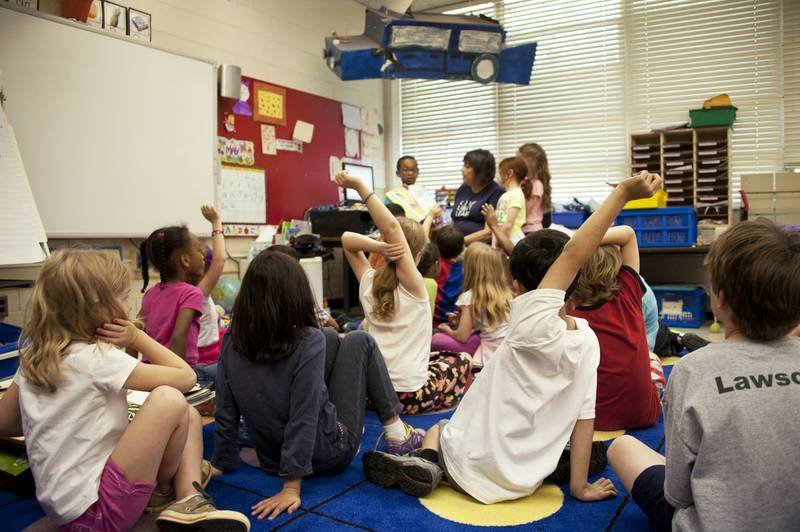
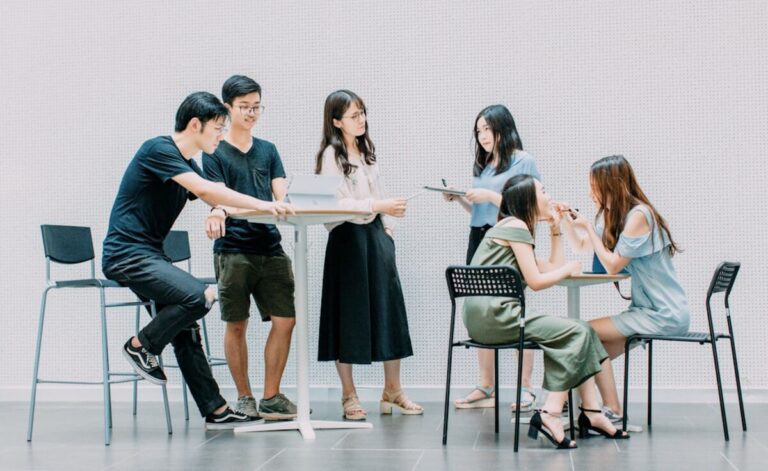
Every CLL session starts the same way: a small group, ideally under twelve students, sits facing inward in a circle. The teacher stands or sits just outside it. This isn’t staging for its own sake — Curran wanted the physical layout to remove the usual “teacher at the front” power dynamic entirely. When a student wants to say something, they signal the knower, who leans in and offers the English phrase quietly, for that student alone to repeat to the group.
The first time you run this with a class of teenagers used to raising hands and waiting to be called on, expect confusion. Give it two sessions. Once students realize no one is watching a worksheet for the “right answer,” the quieter ones usually talk more, not less.
2. Recorded Conversation
Once a student has the English version of their sentence from the knower, they say it into a recorder placed at the center of the circle — not for a grade, but so the class can replay their own words later. This single design choice separates CLL from almost every other speaking activity: the recording is made of language the students generated, not a textbook dialogue they’re reading aloud.
Keep early recordings short. A five-minute conversation among eight students, each contributing two or three sentences, produces more than enough raw material for the stages that follow. Longer than that and the transcription stage below turns into a slog nobody wants to finish.

3. Transcription for Noticing
After the recording, students listen back and write down exactly what was said — their own voices, their own sentences, spelled out on paper or a shared doc. This is where CLL quietly does the heaviest linguistic lifting. Students notice their own errors, their own hesitations, and their own successful phrasing without a teacher circling mistakes in red pen.
Transcription is slow at first. Budget real time for it — fifteen to twenty minutes for a five-minute recording is normal, especially with lower-level groups still mapping sounds to spelling. The payoff is a document built entirely from language the student actually produced, which makes the next stage land harder than any textbook exercise could.
4. Reflective Discussion
Between the recording and the transcription, Curran’s model inserts a stage most published lesson plans skip: an open, unrecorded discussion about how the activity felt. Was it stressful to wait for the knower? Did anyone feel rushed? This stage treats the emotional experience of speaking a foreign language as data worth collecting, not an inconvenience to work around.
Skip this stage and CLL becomes just a slower way to produce a transcript. Keep it, and you get a genuine read on which students are hitting a confidence wall — information that rarely surfaces in a normal lesson until a quiz reveals it too late.

5. Small-Group Language Analysis
With the transcript in hand, the class turns detective. In pairs or small groups — the same structure behind Fikiria-Pair-Shiriki — students sort their own sentences into patterns: which verb tense keeps showing up, where word order slipped, which phrase a stronger student modeled that others picked up by ear. The teacher joins only to confirm or gently correct a pattern the group has already half-identified.
This stage is where advanced students get the most mileage. Give them the transcript and a short list of categories — tense, word order, vocabulary choice — and let them build the grammar lesson themselves out of their own speech.

6. The Human Computer Drill
A lesser-known CLL technique has one student act as a “human computer”: a classmate asks to hear a phrase repeated, as many times as needed, with no judgment attached to asking twice or ten times. The “computer” repeats it exactly, flat and patient, until the learner is satisfied with their own pronunciation.
It sounds almost too simple to work, but the mechanism is real — removing the social cost of asking for a repeat changes how often lower-confidence students actually ask. Pair this with pronunciation-focused vocabulary and it becomes a five-minute warm-up on its own, independent of the full five-stage cycle.

7. Free Conversation Follow-Up
The cycle closes with a second, unscripted conversation on the same topic — this time without the knower feeding every sentence. Students draw on the vocabulary and structures the group surfaced during analysis, but the training wheels come off. How much students lean on their new transcript-derived phrases here is the clearest signal of whether the lesson actually transferred.
This is also the moment to record again if time allows. A side-by-side comparison of the first and second recordings — same topic, same students, thirty minutes apart — is a more honest progress check than any quiz you could write that day.

Where Community Language Learning Falls Short
CLL works best with adult learners who already have some linguistic footing and can sit through a slow, reflective process without losing focus. Put a class of restless twelve-year-olds in the circle and the method falls apart fast — young learners need more direct scaffolding than a knower whispering from outside the group can provide. The non-directive teacher role also makes lesson planning genuinely hard to prepare in advance, since the content of the lesson is whatever the students decide to talk about that day.
Class size is the other practical wall. Curran designed CLL for groups small enough that every student gets several turns with the knower in a single session — past about twelve students, the wait time between turns kills the momentum the method depends on. Anyone teaching the standard 25-to-35-student public school class in Taiwan or similar markets will need to split the group and run stations, with half the class in the circle while the other half does independent work, rather than trying to force the whole roster into one conversation.
The honest take: nobody should run CLL as their entire curriculum in 2026. But the circle format, the recorded conversation, and the human computer drill are each strong enough to borrow individually, even inside a conventional communicative classroom. Steal the parts that solve a real problem in your room and skip the parts that don’t.
Video: CLL in a Real Classroom
Final Thoughts
Curran built Community Language Learning around a bet that most ESL methodology still underrates: students learn faster when the material is their own voice, not a stranger’s dialogue in a textbook. You don’t need to adopt the full five-stage circle to test that bet. Record one real conversation this week, transcribe it with the class, and watch which patterns the students spot on their own before you point to a single one.
Vyanzo
- TeachingEnglish (British Council) — Community Language Learning — overview of the five-stage method and the teacher-counsellor role.
- Diane Larsen-Freeman, “Community Language Learning” — foundational chapter from Techniques and Principles in Language Teaching.
- Sanako — A Look Into Community Language Learning (CLL) — stages, benefits, and criticisms of the method in modern classrooms.






 SW
SW  EN
EN  ZH
ZH  ZH_CN
ZH_CN  KO
KO  VI
VI  FR
FR  AR
AR  ES
ES  HI
HI  PT
PT  BN
BN  RU
RU  JA
JA  TR
TR  DE
DE  IT
IT  PL
PL  ID
ID  TH
TH  FA
FA  UK
UK  TL
TL  HE
HE  UR
UR  RO
RO  NL
NL  MS
MS  TA
TA  PS
PS  HU
HU  EL
EL  SV
SV  NB
NB  NN
NN  DA
DA  CS
CS  SR
SR  AM
AM