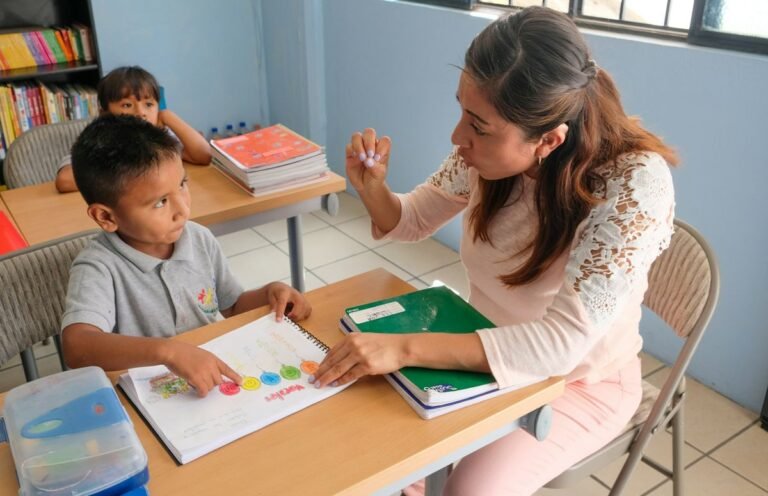
SLIFE student with limited or interrupted formal education in an ESL classroom
|

SLIFE Students: 8 Proven Strategies

SLIFE students — those with limited or interrupted formal education — need a different starting point than other ESL learners because they’re missing foundational literacy or numeracy skills, not just English vocabulary. The fix isn’t harder worksheets; it’s building oral language first, treating the home language as an asset instead of a problem, and screening…

ESL parent and teacher communicating during a parent-teacher conference
|

ESL Parent Communication: 8 Proven Strategies

Strong ESL parent communication starts with a reliable translation system, communication channels parents actually open (phone and text over email-only), and first contact that’s positive before it’s ever necessary. Skip the newsletter-only approach — a 2019 Wyoming study found that only 4.29% of administrators saw ELL families as highly involved, even though nearly two-thirds agreed…

Teacher leading a diverse ESL classroom that includes gifted ESL students
|

Gifted ESL Students: 8 Proven Strategies

Gifted ESL students need work that moves faster than the rest of the class, not more of the same worksheet. The fix is curriculum compacting (skip what they’ve already mastered), depth-and-complexity tasks instead of extra practice, and grouping them with intellectual peers instead of making them the unpaid tutor for slower classmates. Language level and…

teacher working one-on-one with a visually impaired ESL student
|

Visually Impaired ESL Students: 8 Strategies

Visually impaired ESL students learn best when teachers replace picture-based activities with real objects, front-load listening before speaking, and build in braille or audio literacy from day one. The core shift is sensory, not academic — a blind or low-vision student can hit the same language targets as sighted classmates once charts, worksheets, and “describe…

Teacher working with deaf ESL students in an inclusive classroom
|

Deaf ESL Students: 8 Proven Strategies

Deaf ESL students learn English most effectively through visual channels — pictures, text, sign language, and captioned video — rather than sound alone. The strongest classrooms pair a bilingual ASL-to-English approach with concrete accommodations: guaranteed eye contact before speaking, extra processing time, captioned media, and a reliable note-taking or interpreter system. None of this requires…