

Why AI Gets Facts Wrong — and How Teachers Can Catch It
Ask an AI chatbot to write a reading passage about the history of English, and it will hand you a fluent, tidy paragraph in seconds. It reads beautifully. It also might tell your students that the word “salary” comes from Roman soldiers being paid in salt, that the present perfect is never used with a specific past time (mostly true, but stated as an absolute), or that a made-up author wrote a famous novel. The prose is confident. The facts are not always there. For English teachers leaning on AI to build lesson materials, the real skill is no longer generating content — it is knowing how to fact-check AI-generated content before it ever reaches a classroom.
This is not a checklist article. Plenty of guides give you a list of boxes to tick. What is more useful — and more durable as the tools keep changing — is understanding Neden these systems produce errors in the first place. Once you grasp where the mistakes come from, you stop verifying randomly and start verifying strategically: checking the exact places where AI is statistically most likely to be wrong.
The Confidence Trap
The single most dangerous quality of AI-generated text is that wrong answers look exactly like right ones. A human colleague who is unsure will hedge — “I think,” “I am not certain,” “you might want to double-check that.” A large language model produces the same smooth, authoritative tone whether it is quoting a verified fact or inventing one whole. There is no visible signal, no wobble in the voice, to warn you that the ground has shifted from fact to fabrication.
That matters enormously for teachers, because we are trained to trust well-written prose. Years of reading student work have wired us to associate fluency with competence. AI exploits that instinct. A grammatically flawless explanation of the third conditional feels trustworthy, and that feeling is precisely what you cannot rely on. The first mental shift, then, is to divorce polish from accuracy. Smoothness tells you the model wrote confidently. It tells you nothing about whether the claim is true.
What “Hallucination” Actually Means
The term you will see thrown around is hallucination — the tendency of an AI to generate confident, plausible-sounding information that is simply false. It is a slightly misleading word, because it suggests a glitch, a rare malfunction. In reality, hallucination is not a bug bolted onto an otherwise factual machine. It is a direct consequence of how these systems work.
A language model does not “know” facts the way a dictionary or an encyclopedia stores them. It predicts the next most likely word based on patterns in the enormous amount of text it was trained on. When you ask for the etymology of a word, it is not looking up an entry — it is assembling a sequence of words that statistically resembles a correct etymology. Most of the time, that pattern-matching lands on the truth, because the truth appeared often in its training data. But when the real answer is obscure, contested, or absent, the model fills the gap with whatever sounds right. It cannot tell the difference between recalling and inventing, because to the model they are the same operation.
Understanding this reframes your whole approach. You are not hunting for occasional broken sentences. You are auditing a system that is always guessing, and that guesses best where information is common and worst where it is specific, rare, or precise. That single insight tells you where to point your attention.
Where the Errors Hide in ESL Materials
Not all AI output carries equal risk. A creative dialogue between two characters at a café has almost nothing to fact-check — it is invention by design. A paragraph about the origin of a grammar rule, on the other hand, is a minefield. Learning to recognise the high-risk zones lets you verify quickly instead of re-reading everything with the same anxious intensity.
Grammar rules stated as absolutes
English grammar is a landscape of tendencies and exceptions, but AI loves a clean rule. It will happily tell students that you “always” use o before superlatives, or “never” split an infinitive, flattening real usage into tidy commandments that collapse the moment a learner meets an authentic text. The error here is rarely an outright lie — it is over-simplification presented as law. When you see the words always, never, or must, slow down and ask whether the rule survives contact with real English.
Word origins, definitions, and “fun facts”
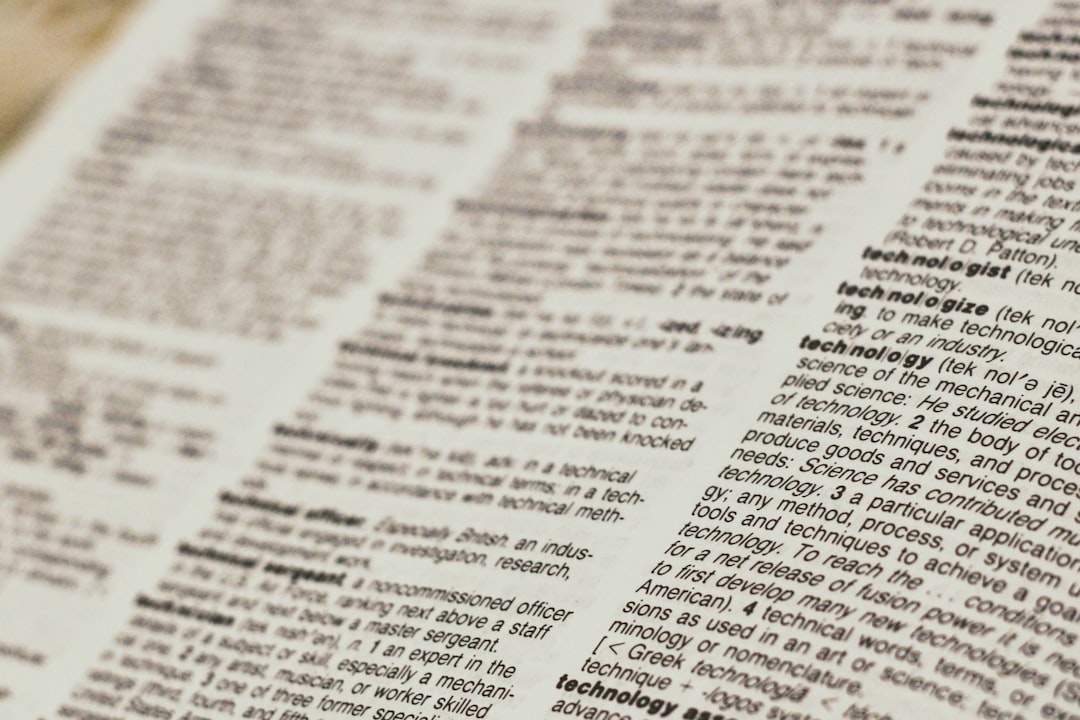
Etymology is catnip for hallucination. The salt-and-salary story is a genuine example that is widely repeated yet historically shaky, and AI reproduces these appealing myths without a flicker of doubt. The same goes for “most common word in English” claims, invented statistics about how many words a native speaker knows, and neat but false origin stories. These “fun facts” are exactly the kind of engaging detail teachers love to sprinkle into a lesson — and exactly where AI is least reliable.
Numbers, dates, and citations
Anything precise is a red flag. Test scores, publication dates, the number of speakers of a language, the year an author was born, the source of a quotation — these are single points of fact with no pattern to lean on, and the model is guessing at a specific value. AI is notorious for inventing citations that look real: a plausible author, a plausible journal, a plausible year, all describing a study that does not exist. If your generated worksheet cites a statistic or a source, treat that line as unverified until you have seen it with your own eyes elsewhere.
Example sentences and cultural references
These are lower-risk but not risk-free. AI-generated example sentences are usually grammatical, yet they can be subtly unnatural — collocations no native speaker would use, register that clashes with the context, or idioms deployed incorrectly. Cultural references can be dated or simply wrong, which matters when you are teaching learners who will take your materials as a model of authentic English. Here you are checking for naturalness rather than fact, but the discipline is the same: do not assume fluency equals correctness.
Reading Against the Grain
Once you know where errors cluster, verification becomes a mindset rather than a chore. Read the AI output the way a sceptical editor reads a first draft — assuming there is a mistake somewhere and your job is to find it. As you go, mentally sort every claim into one of two buckets: things that are obviously safe (a creative story, a general explanation you already know cold) and things that make a specific, checkable assertion. Only the second bucket needs your time.
A useful habit is to ask, for each factual claim, “How would I know this is true?” If the answer is “I already teach this and I am certain,” move on. If the answer is “I would have to look it up,” then the AI had to as well — except it did not look anything up, it guessed. That is your signal to verify. This question does more work than any checklist, because it scales with your own expertise: the more you know, the less you need to check, and the gaps that remain are exactly the ones worth checking.

Cross-Referencing Without Losing Your Evening
Verification sounds exhausting until you realise most checks take under a minute. The core technique is triangulation — confirming a claim against at least one independent, trustworthy source before it goes into a lesson. For vocabulary, definitions, and usage, an established learner’s dictionary such as the Cambridge or Oxford online dictionary settles most questions instantly. For grammar, a reputable reference or a corpus tool showing real examples in context will tell you whether that “rule” holds. For general facts, a quick search that surfaces two or three consistent, reputable sources is usually enough.
One trap to avoid: do not fact-check an AI by asking the same AI, or another one, “Is this correct?” You will often get a confident yes that is just as invented as the original claim. The whole point of triangulation is that your check comes from outside the system that produced the error — a human-authored, editorially reviewed source. Asking a model to grade its own homework is not verification; it is a second guess dressed up as confirmation.
A practical rhythm emerges once you internalise this. Skim the generated material, flag the specific claims and precise numbers, and batch your checks: open the dictionary tab, run two or three quick searches, and clear the flags in one focused pass. What feels like a burden the first week becomes a two-minute reflex by the second.

Turning Fact-Checking Into a Teachable Skill
Here is where the burden turns into an opportunity. The verification instinct you are building is itself one of the most valuable things you can pass to students. Your learners are already using AI — for homework, for translation, for writing help — and most of them trust it uncritically, the same way we are tempted to. Modelling how you catch an AI error in front of the class teaches digital literacy far more powerfully than any lecture about it.
Try generating a short passage live, then working through it with the class: “This sentence claims the word comes from Latin — how could we check?” You are teaching English, evaluation, and source literacy in a single activity. Learners see that fluent English is not the same as trustworthy information, a lesson that will serve them long after they leave your classroom. It also quietly reframes AI for them: not an oracle to be obeyed, but a fast, fallible draft-writer that always needs a human editor.
For higher levels, you can push further — have students find and correct a deliberate AI error as a critical-reading task, or compare an AI definition against a dictionary and discuss the gap. This folds neatly into TOEIC or IELTS preparation, where evaluating sources and detecting unsupported claims is exactly the kind of critical reading the exams reward.
Building the Habit Into Your Workflow
The goal is not to distrust AI so thoroughly that you stop using it — that would throw away a genuinely powerful tool for lesson design, differentiation, and saving time on the mechanical parts of planning. The goal is to use it the way a good editor uses a fast but unreliable junior writer: welcome the draft, expect errors in predictable places, and never publish without a check.
In practice that means a small, permanent change to how you prompt and process. When you ask AI for material, ask it to keep factual claims minimal and to flag anything it is unsure about — models will often comply and it narrows your search. Keep your trusted references one click away. And carry the assumption, quietly, that the confident paragraph in front of you contains at least one thing that is not quite true. That assumption is not cynicism. It is simply an accurate mental model of how the tool works, and it is the difference between a teacher who is empowered by AI and one who is quietly misled by it.
Fact-checking AI-generated content, in the end, is less about the technology and more about a habit of mind teachers already have — the same instinct that makes us double-check a suspicious statistic or a too-neat anecdote before repeating it. AI has simply made that instinct essential rather than optional. Bring your professional scepticism to the machine, aim it at the places where errors hide, and you get the best of both worlds: the speed of automation and the accuracy your students deserve.

Kaynaklar
- Wikipedia — Hallucination (artificial intelligence)
- Cambridge Sözlüğü
- Oxford Learner’s Dictionaries
- İngiliz Konseyi
Looking for free ESL worksheets? Browse our full collection — printable resources for every level and age group. Browse Free Worksheets →
Students can access free worksheets and reading materials at 18KEnglish.com.









 TR
TR  EN
EN  ZH
ZH  ZH_CN
ZH_CN  KO
KO  VI
VI  FR
FR  AR
AR  ES
ES  HI
HI  PT
PT  BN
BN  RU
RU  JA
JA  DE
DE  IT
IT  PL
PL  ID
ID  TH
TH  FA
FA  UK
UK  TL
TL  HE
HE  UR
UR  SW
SW  RO
RO  NL
NL  MS
MS  TA
TA  PS
PS  HU
HU  EL
EL  SV
SV  NB
NB  NN
NN  DA
DA  CS
CS  SR
SR  AM
AM