
Robinson Crusoe Summary: 7 Key Themes and Lessons
Daniel Defoe was almost 60 and buried in debt when he published رابینسون کروزوئه on 25 April 1719. It sold fast enough to run through four editions before the year was out, and readers took the fictional castaway for a true memoir. Three centuries later the story still lands in reading lists from London to Taipei. This Robinson Crusoe summary walks through the plot, the main characters, the themes worth teaching, and the classroom questions and activities that turn a long 18th-century novel into a usable lesson.
Robinson Crusoe Summary: The Whole Story in Five Minutes
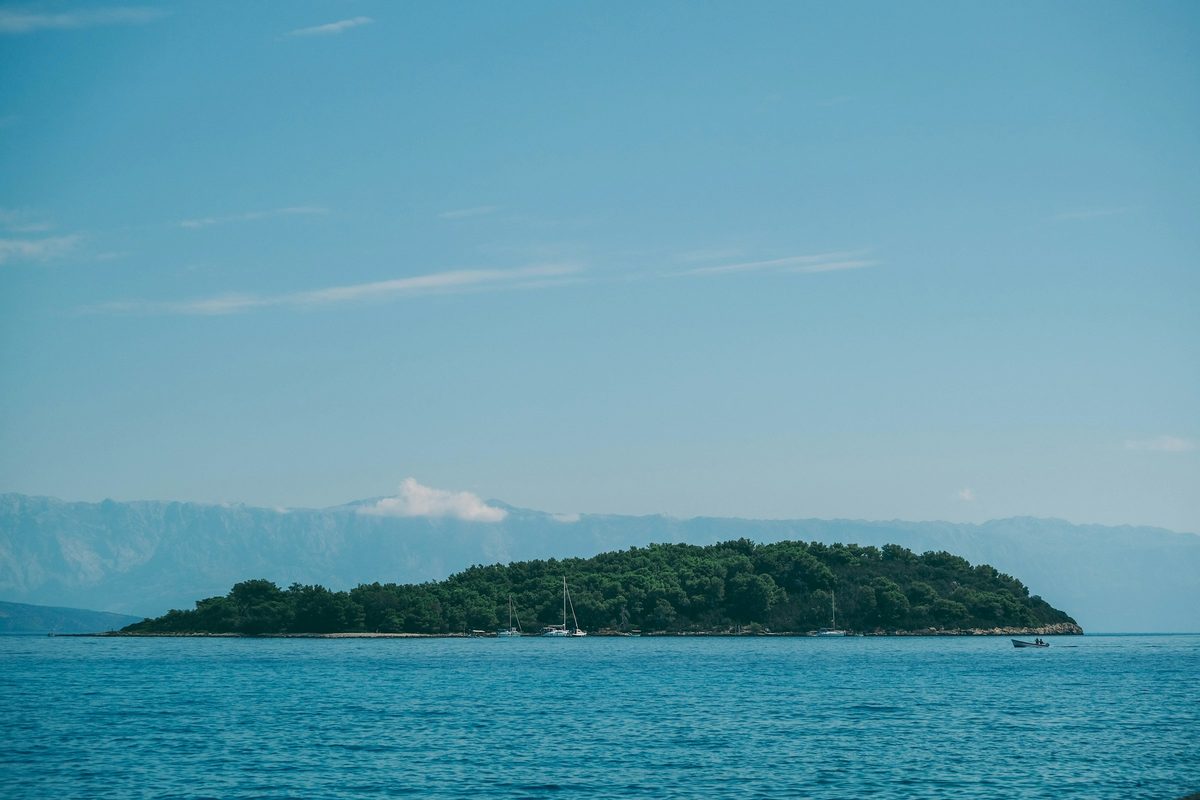
A restless young man from York runs off to sea against his father’s wishes. After storms, capture by pirates, and two years of slavery, he escapes and builds a comfortable life as a plantation owner in Brazil. Greed pulls him back onto a ship, a hurricane wrecks it, and he washes up as the only survivor on a deserted island near the mouth of the Orinoco River. He stays there 28 years. He hunts, farms, tames goats, reads the Bible, and slowly rebuilds a kind of civilization for one. Late in his exile he saves a captured islander from cannibals, names him Friday, and gains a companion. The two eventually help an English captain put down a mutiny, and Crusoe sails home to find he has become rich in his absence.
That is the shape of it. The detail underneath is where the novel earns its reputation, so here is the plot broken into the parts most editions and study guides use.
Robinson Crusoe Plot Summary, Part by Part
The novel covers roughly 35 years of one life, told as a first-person memoir. Defoe wrote it without chapter numbers, so the divisions below follow the natural turns in the story rather than the original text.
The restless son who won’t stay put
Crusoe’s father wants him settled in the “middle station of life” — law, a steady income, no risk. Crusoe wants the sea. He leaves at 18, and his very first voyage nearly drowns him. He ignores the warning. On a later trip his ship is taken by pirates from Salé, on the Moroccan coast, and he spends about two years enslaved before escaping in a small boat with a boy named Xury. A Portuguese captain rescues them and carries Crusoe to Brazil.
Wealth in Brazil, then the fatal voyage
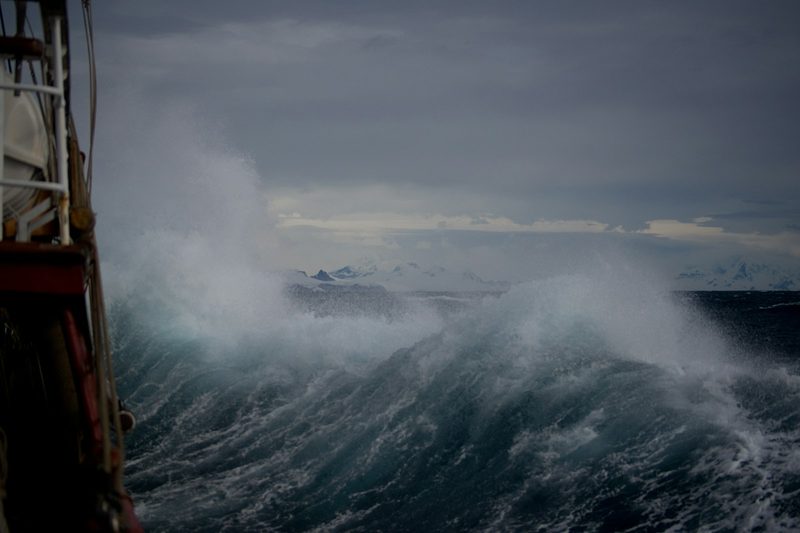
In Brazil he buys land and grows sugar, and within a few years he is prospering. The trouble is that he cannot sit still with success. He agrees to sail to Africa to bring back enslaved workers for the local planters — a detail worth pausing on with older students, because it places the hero inside the slave trade. A storm scatters the ship off the South American coast and destroys it. Crusoe alone reaches land.
Alone on the island
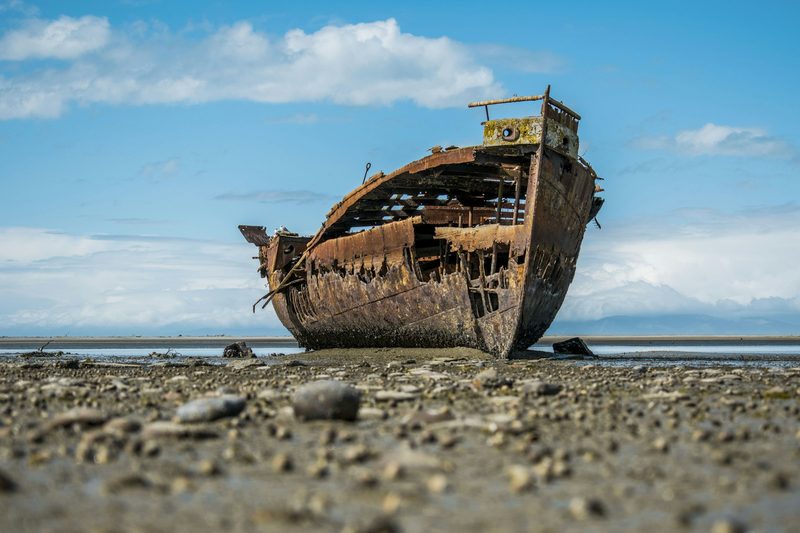
Crusoe swims back to the wreck again and again, hauling off tools, guns, gunpowder, food, and timber before it breaks apart. This salvage becomes the engine of his survival. He builds a fortified shelter, carves a calendar into a post, and starts a journal. He learns to grow barley and rice from spilled seed, tames wild goats for milk and meat, and after many ruined attempts, fires his own clay pots. A long illness pushes him toward the Bible he salvaged, and he describes a religious conversion that reframes the whole ordeal as providence rather than bad luck.
The footprint and Friday
After roughly 15 years of thinking he is alone, Crusoe finds a single bare footprint in the sand. The moment terrifies him — it is the most famous scene in the book — and he spends years in fear of the cannibals who occasionally land on his shore. Eventually he rescues one of their prisoners, a young man he names Friday for the day of the rescue. Crusoe teaches him English and Christianity, and the two build a working partnership, though a lopsided one: Crusoe is master, Friday is servant.

Rescue and return
An English ship arrives with a mutinous crew who mean to maroon their captain. Crusoe and Friday help the captain retake the vessel, and in exchange Crusoe finally sails home after 28 years, 2 months, and 19 days on the island. Back in England he discovers his Brazilian plantation has run profitably the entire time, leaving him wealthy. He marries, has children, and even revisits his old island years later.
Who’s Who: Characters in Robinson Crusoe
The cast is small, which makes character analysis manageable for a class. Four figures carry the whole book.
- رابینسون کروزوئه — the narrator. Stubborn, practical, restless, and eventually devout. He grows from an impulsive teenager into a disciplined survivor who reads his own life as a moral lesson.
- Friday — the islander Crusoe rescues. Loyal, quick to learn, and warm, but written entirely through Crusoe’s eyes. Modern readers rightly question how little voice Defoe gives him.
- Crusoe’s father — appears only at the start, yet his advice about the “middle station” hangs over the entire story. Every disaster reads as a consequence of ignoring him.
- Xury — the boy who escapes slavery alongside Crusoe, then is sold by Crusoe to the Portuguese captain. A short episode that tells you a lot about the hero’s blind spots.

7 Key Themes in Robinson Crusoe
If you only have time to teach a handful of ideas, these are the ones that carry the most weight and connect to a student’s own life.
- Survival and self-reliance. Half the book is a how-to manual: building, planting, cooking, defending. Crusoe’s competence is the fantasy readers keep returning to.
- Isolation and solitude. Defoe spends real pages on loneliness and the mental cost of having no one to talk to for years. It is not all heroic.
- Faith and providence. Crusoe reframes his shipwreck as God’s plan, and his conversion is the emotional center of the second half.
- Civilization versus nature. He rebuilds English domestic life — fences, furniture, a “country house” — on a wild island, as if he cannot imagine living any other way.
- Colonialism and power. Crusoe calls the island “my island” and Friday “my man.” The master-and-servant relationship is the theme most worth discussing critically today.
- Work and property. Value in Crusoe’s world comes from labor. Gold coins from the wreck are useless to him; a knife or a sack of seed is priceless.
- Transformation. The reckless boy of chapter one and the reflective old man of the ending are barely the same person.

Robinson Crusoe Vocabulary Worth Pre-Teaching
The prose is 300 years old, so front-load the words students will trip over. Teaching eight to ten of these before reading saves a lot of stopping later.
- castaway / stranded — left alone somewhere with no way to leave.
- shipwreck — the destruction of a ship at sea.
- provisions — supplies of food and equipment.
- salvage — to save goods from a wreck or ruin.
- cultivate — to prepare land and grow crops.
- solitude — the state of being alone.
- providence — the idea that God or fate guides events.
- mutiny — a rebellion by sailors against their captain.
- plantation — a large farm growing one main crop.
- savage / cannibal — worth teaching و flagging: both are loaded, dated terms tied to the book’s colonial viewpoint.
A short reading warm-up helps here. If you want ready-made options, our guide to ESL activities that actually work has pre-reading tasks you can drop straight in.
Discussion Questions That Actually Spark Talk
Skip the plot-recall questions a search engine can answer. These push students to take a position, which is where the language production happens.
- Crusoe ignores his father and pays for it for decades. Was he brave or foolish? Defend your answer.
- What would be the hardest part of 28 years alone for you — the work, the fear, or the silence?
- Crusoe names Friday and teaches him English but never asks his real name. What does that choice tell us about Crusoe?
- The gold from the wreck is worthless on the island. What would count as “rich” in a place with no one to trade with?
- Is Robinson Crusoe an adventure story, a religious story, or a story about power? Argue for one.
Three Classroom Activities Built Around the Novel
Reading the full 200-plus pages is a stretch for most language classes, so build tasks around the ideas instead of the page count.
1. The survival list. Tell students they have five minutes to grab ten items from a sinking ship before it goes under. They write their list, then defend three choices to a partner. It drills modal verbs (“I would take…”, “we could use…”) and mirrors Crusoe’s salvage runs.
2. Friday’s diary. Have students rewrite one scene from Friday’s point of view. This exposes exactly how little the original gives him, and it is a strong way to teach perspective and past tense narration at once.
3. Island rules. In groups, students draft five laws for a new island society. It turns the book’s civilization-versus-nature theme into a speaking and negotiation task. Pair it with a reading worksheet to lock in the vocabulary first.

For the full arc of the story, characters, and background before you plan, our complete guide to Robinson Crusoe lays out everything in one place. And if your class enjoys unpacking a novel this way, the same treatment works for our Ender’s Game summary and themes.
Why a 300-Year-Old Survival Story Still Earns Classroom Time
The honest case for teaching Robinson Crusoe is not that it is a comfortable book — it is not. Its view of race, slavery, and empire is exactly what you would expect from 1719, and pretending otherwise does students no favors. The better move is to teach it with the seams showing: let students admire Crusoe’s grit and question his assumptions in the same lesson. A novel you can both enjoy and argue with is worth more classroom time than one that only flatters its hero.

Start with the survival list activity next week, hand out ten vocabulary words, and let a class of teenagers decide for themselves whether they would have listened to Crusoe’s father. That argument, in English, is the whole point.
منابع
- Robinson Crusoe — full text, Project Gutenberg — the complete original novel, free to read.
- Robinson Crusoe, Encyclopaedia Britannica — overview of the novel, publication, and legacy.
- Daniel Defoe, Encyclopaedia Britannica — biography of the author and his place in the English novel.
Looking for free ESL worksheets? Browse our full collection — printable resources for every level and age group. Browse Free Worksheets →
Students can access free worksheets and reading materials at 18KEnglish.com.
Need help ranking on Google? RankOnRepeat manages your entire blog — keyword research, writing, and publishing — so your business shows up when customers search. See how it works →






 FA
FA  EN
EN  ZH
ZH  ZH_CN
ZH_CN  KO
KO  VI
VI  FR
FR  AR
AR  ES
ES  HI
HI  PT
PT  BN
BN  RU
RU  JA
JA  TR
TR  DE
DE  IT
IT  PL
PL  ID
ID  TH
TH  UK
UK  TL
TL  HE
HE  UR
UR  SW
SW  RO
RO  NL
NL  MS
MS  TA
TA  PS
PS  HU
HU  EL
EL  SV
SV  NB
NB  NN
NN  DA
DA  CS
CS  SR
SR  AM
AM